My Photography Blog

Welcome to the Chris Kendrick Photography Blog, where I share the stories, challenges and inspirations behind shooting Lake District landscapes and working as a Cumbria-based photographer. Alongside behind-the-scenes reflections from the fells and lakes, you'll also find honest photography gear reviews, covering the cameras, lenses and accessories that genuinely perform in real Lake District conditions. Whether you’re passionate about landscape photography, exploring Cumbria’s scenery, building your kit, or simply curious about the craft, there’s something here for you.

Some posts include affiliate links; thank you if you choose to support the blog through a qualifying purchase. If there’s a topic or piece of gear you’d like me to cover, let me know. Enjoy exploring!

Enjoy!
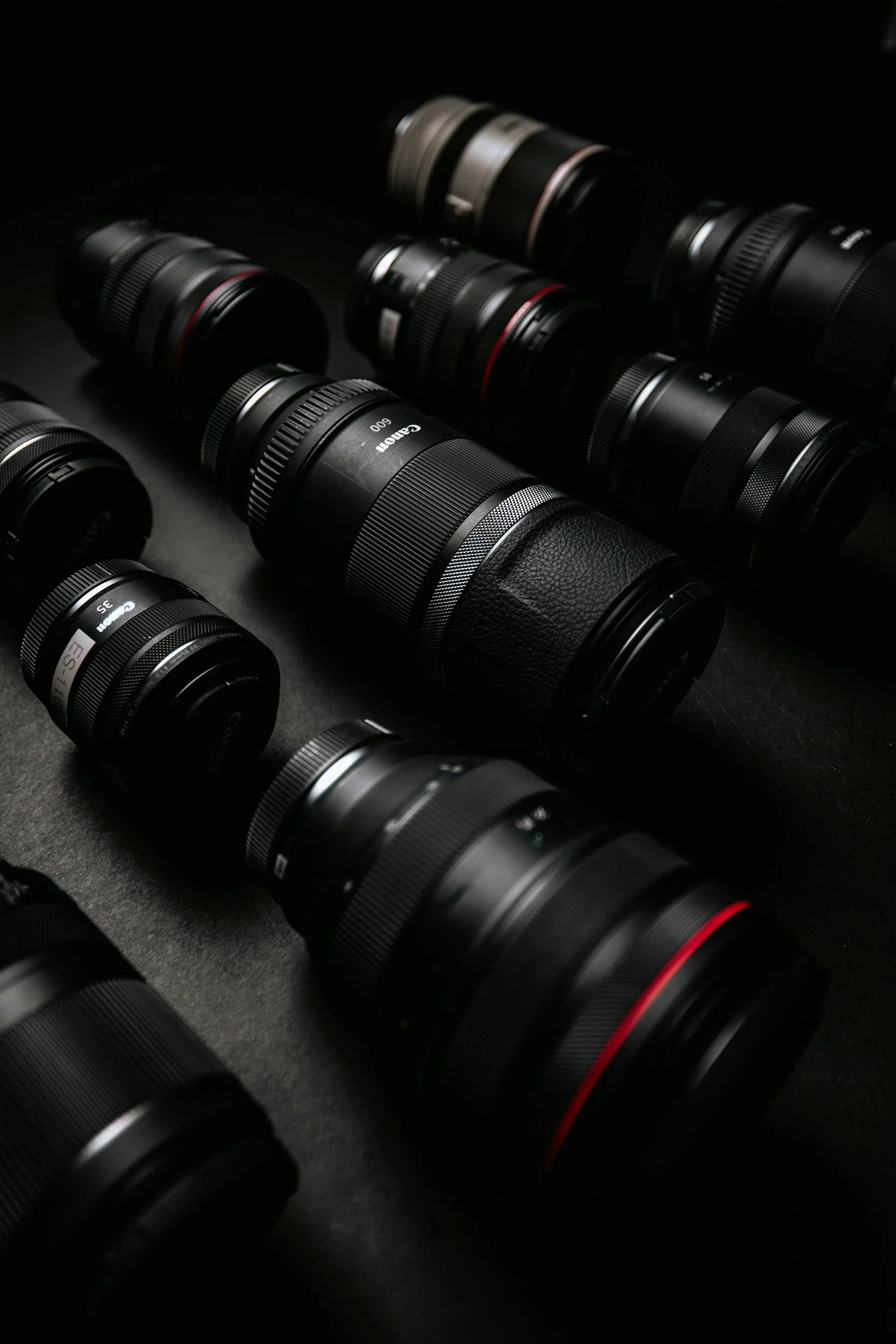
Aperture in Landscape Photography - Should You Buy f/4 or f/2.8 lenses?

Choosing between f/2.8 and f/4 lenses can be confusing. This guide breaks down the real differences for landscape photographers, including cost, weight, sharpness, and low-light performance, to help you decide which option truly fits your shooting style.

Choosing the right lens is one of the most important decisions you’ll make as a landscape photographer. While your camera body is often the biggest single investment, the lenses you mount on the front of it arguably have an even greater impact on the final image.

Modern lenses offer an overwhelming number of choices: different brands, focal lengths, stabilisation options, generations, and feature sets. But one of the most common questions photographers face is far simpler.

This blog contains Amazon affiliate links and I may receive a small commission if you use one of these and make a qualifying purchase. This is a great way to support the blog and allows me to keep producing content like this. Thank you!

Should you choose an f/2.8 lens or an f/4 lens?

Most popular zoom lenses are available in both versions, and the price, size, weight, and performance differences can be significant. Fast lenses (with wider maximum apertures like f/2.8) promise better low-light performance and stronger background blur, while f/4 lenses are lighter, cheaper, and often more practical for landscape work.

In this article, I’ll break down the real-world differences between f/2.8 and f/4 lenses from a landscape photographer’s perspective, covering cost, weight, depth of field, low-light performance, and image quality, so you can decide which option genuinely makes sense for your style of photography.

Most lenses will be available in a variety of f/stops, most frequently, you will find the highest available iteration of a lens is f/4 and the lowest is f/1.8. You will find that as you start to look at longer lenses such as the Sigma 150-600, the widest aperture gets a lot smaller; this lens has a maximum aperture of f/5.0. You can get longer lenses with a wider maximum aperture such as the Canon EF/400, which has an f/2.8 aperture but will also set you back in the region of £11,000!

This is a good time to talk about our decision points.

TL;DR - f/2.8 vs f/4 lenses for landscape photography

  • Choose f/2.8 if you frequently shoot in very low light, do astrophotography, want strong background blur, or often shoot handheld.

  • Choose f/4 if you mainly shoot landscapes, use a tripod, value lighter gear, and want excellent image quality at a lower cost.

  • For most landscape photographers, f/4 lenses offer the best balance of sharpness, portability, and value.

  • f/2.8 lenses are excellent, but often unnecessary unless your work regularly demands the extra stop of light.

Cost

Lenses with wide maximum aperture, also known as fast lenses, are more expensive than ‘slower’ lenses.

A good example of this is the Canon EF/16-35mm. You can buy the f/4 version for £1349 whereas the f/2.8 version is going to set you back in excess of £2000.

The reason for this difference is because faster lenses are harder to design, engineer and build and they also require more elements (pieces of glass) and this high quality optical glass is expensive. Then you need think about the motors which need to be stronger to be able to handle the heavy pieces of glass and they need the tech to handle things such as chromatic aberration and incredibly tight engineering tolerances to ensure that your images are sharp at the widest aperture.

The final piece of this puzzle is that fast lenses are often manufactured in smaller quantities so this pushes up the cost of each individual lens.

Think of it a bit like buying a sports car versus a family car - both are going to do the same thing insomuch as they will get you from A-B, but the sports car is made from more expensive materials, tighter engineering tolerances, more testing and fewer of them are made therefore, it is far more expensive than a mass produced family runaround.

Weight

This one is fairly straightforward. Faster lenses are heavier and this is because they have more elements in them, and as a result have more motors to drive those elements.

If we look at the same comparison above and think about the Canon EF/16-35mm, there is a difference of nearly 200g between the heavier f/2.8 lens and its f/4 version. There is also a slight size difference in both length and the size of the front element with the faster lenses being larger.

Weight is going to be a consideration if you’re carrying lenses out on a hike or if you’re handholding for long periods. 200g doesn’t sound like a lot, but when you’ve got a number of fast lenses that you need to carry then that could be an extra kilo in your bag depending on what choices you have made.

Depth of Field

This is the big one. We all know that aperture affects depth of field. If you’re not sure about this, check out my beginner’s guide to the exposure triangle, this will help you to understand what I am talking about.

So we know that the wider the aperture, the shallower the depth of field. We also know that most lenses (and I am speaking very broadly) are at their sharpest at around f/8.

As landscape photographers we (and again, I am speaking generally) want our images to have corner to corner sharpness to really show off the beauty of what we are capturing but we also need the flexibility of wider apertures when it comes to shooting in low light.

This is where we need to consider the type of photography we are doing. If you are primarily shooting astro, then you are probably going to want to go for the faster lenses so that you are able to capture more light in your images in as shorter time as possible, especially if you’re shooting without a star tracker.

For most landscape purposes, I would argue that f/4.0 is more than enough. Yes, I do own some lenses which are faster than this, for example my 85mm prime, which is an f/1.2 version is huge and very heavy, the front element is like a bucket, but I rarely use this for landscapes as the focal length isn’t one that I like for this kind of work - it’s a banging portrait lens though, and if you’re into street photography, especially at night, then this is a great option.

In a nutshell, if you’re only shooting landscapes then I would go for the f/4 versions of the lenses that you are looking at, they’ll give you the sharpness you are looking for and are fine in low light, especially if you have IBIS and/or are using a tripod. If you’re looking at other styles of photography which are more handheld, or you if you prefer to shoot handheld as landscape photography then you might want to consider the faster lenses. For example if you’re into wide angle, then Canon 16-35mm f/4L is an excellent choice, I love this lens and your can read my review of it here.

Low Light Performance

This one is quite straightforward. Fast lenses offer better low light performance, larger apertures mean more light can come into the front element of your lens to hit the sensor.

I would say that with advances in ISO performance, IBIS (in body image stabilisation) and lens stabilisation, the advantage of buying a faster lens vs an f/4 lens is getting smaller. However, if you’re into astro landscape photography then you’re probably going to want to splash out on the f/2.8 or wider.

I am happy working on a tripod in low light, it’s a workflow and method that suits me, and forces me to slow down a bit so again, I am firmly in the f/4 camp.

Image Quality

Before you go out and spend any money on a lens, you should always do your research. Lenses aren’t cheap and they are certainly a bit of an investment in yourself/your profession/your hobby.

I am a big believer in the adage “buy cheap, buy twice” so I am happy to save money to buy something better rather than buying something cheap and then having to upgrade it. Unfortunately, this sometimes means we have to wait!

Part of your research should be to check the quality of the images that a lens can produce, and you can do this on a lot of review websites, but the images aren’t always there for you to see. When I review lenses, I always try to put some links to some downloadable raw files so that you can see exactly what the camera and lens I am shooting with will produce. I did this with my review of the Canon EF 16-35mm f/4L.

With fast lenses, shooting wide open can still produce really sharp images, but you might struggle with chromatic aberration at the wider apertures. This can be easily corrected in post, but if you have a lot to edit, this can end up taking more time than you want to.

If you frequently shoot wide open then you might prefer the faster lenses for you style, but for landscapes, we’re likely to be stopping down anyway, so the wider aperture probably isn’t always going to be worth the extra money.

In Summary

Landscape photography requires, for the most part, images which are sharp from corner to corner and front to back - we even use focus stacking to make sure that we can get all of the parts of our image in focus, so buying fast f/2.8 lenses isn’t the most cost effective decision if all you are shooting is landscapes. The amount of time that you will use these fast apertures can be few and far between.

If you’re someone who shoots in a range of styles and prefers to hand hold then I would suggest exploring some of the faster lenses, but make sure to check out some of the second hand websites, such as MPB so that you can really secure the best value for your money.

Don’t buy a lens that’s going to produce amazing bokeh at f/2.8 and gives you a super shallow depth of field when you’re never going to use it.

My landscape lenses are all f/4 and I haven’t yet found myself wishing I had a faster lens for anything I have worked on so far since I made the switch to primarily landscape photography in the Lake District. That said, when I was living in London, I frequently found I was crying out for faster lenses when I was working at night and trying to take street photos.

Which lenses could you choose?

I have picked some of my favourite lenses and linked them below, but these are all Canon lenses. I have never shot with anything else, other than my Sigma macros lens, but as that’s a bit more specialised, I am leaving it out of this collection of 8 lenses - if you want to read more about the sigma lens, then you can check out my review here.

If you've got budget and you’re really wanting that super-shallow depth of field, shoot in low light or just want to get that bokeh, then go for one of these fast lenses:

Your Product Name 1

Canon 50mm f/1.8 EF Mount

Your Product Name 2

Canon 50mm f/1.8 RF Mount

Canon 85mm f/1.2 RF Fit

Canon 85mm f/1.2 RF Mount

Canon 85mm f/1.4 EF Mount

Canon 85mm f/1.4 EF Mount

If on the other hand, you don’t need that super wide aperture that fast lenses provide, you want something that it’s a bit lighter on the pocket, or you’re concerned about the amount of weight that you’re carrying then you might want to for something along the lines of some of these f/4 lenses:

Canon 16-35mm f/4L EF MOUNT

Canon 16-35mm f/4L

Your Product Name 2

Canon 24-105 F4 - RF MOUNT

Canon RF 100-500 f/4.5-7/1 RF Mount

Your Product Name 3

Canon 70-200 f/4L EF MOUNT

Your Product Name 4

Final Thought

Today’s f/4 lenses are optically excellent, and unless you truly need the extra stop for light or blur, they often represent the best overall value — especially for landscapes, travel, and everyday shooting. But if your style thrives in challenging light or creative depth-of-field, f/2.8 remains something you should be considering.

This graphic summarises some of the key considerations you should make when consider f/2.8 vs f/f4 lenses.

If you’d like to support the blog and help me keep producing Lake District photography content, honest gear reviews and regular website updates, you can do so via my Buy Me a Coffee page. Keeping everything running smoothly takes time, and your support makes a real difference. Thank you.

Check Out Some of My Other Blog Posts by Clicking the Links Below.

Read More