My Photography Blog
Welcome to the Chris Kendrick Photography Blog, where I share the stories, challenges and inspirations behind shooting Lake District landscapes and working as a Cumbria-based photographer. Alongside behind-the-scenes reflections from the fells and lakes, you'll also find honest photography gear reviews, covering the cameras, lenses and accessories that genuinely perform in real Lake District conditions. Whether you’re passionate about landscape photography, exploring Cumbria’s scenery, building your kit, or simply curious about the craft, there’s something here for you.
Some posts include affiliate links; thank you if you choose to support the blog through a qualifying purchase. If there’s a topic or piece of gear you’d like me to cover, let me know. Enjoy exploring!
Enjoy!
Gear Review: SmallRig Vibe P96L RGB Video Light
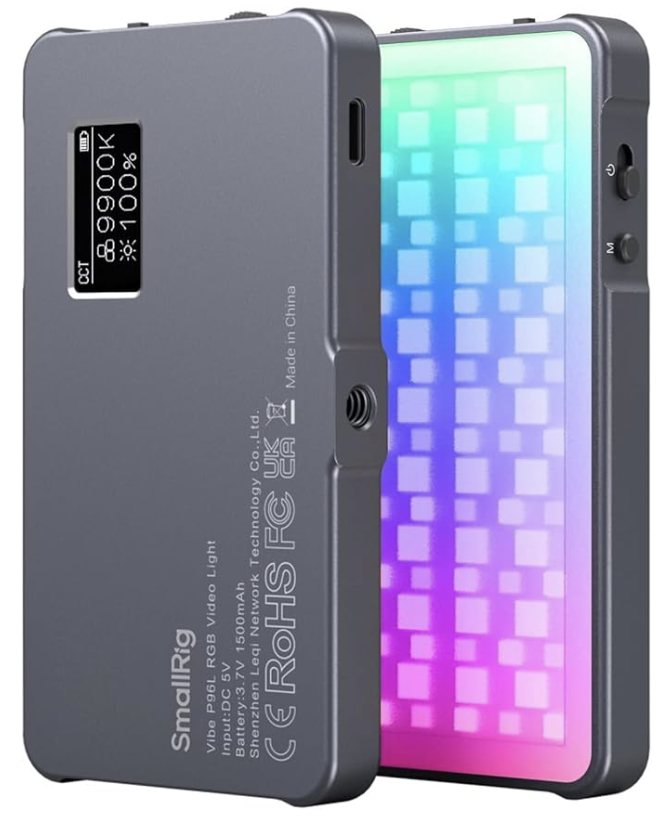
The SmallRig Vibe P96L RGB video light is a compact, pocket-friendly LED that’s ideal for content creators, vloggers and photographers who want reliable on-camera fill light without carrying a full lighting kit. In this review, I’ll cover real-world performance for macro photography, product photography and quick portraits, including colour accuracy, usability, and how well it works as a travel-friendly light. The P96L offers RGB plus adjustable colour temperature (2500–8000K), an OLED display for quick settings checks, and a sturdy aluminium alloy body designed for durability and heat management.
I’m sticking an extra entry in this week, as I wanted to review this light, 2 of which I received as Christmas gifts. These were things that I asked for after having done a bit of research so I had a decent idea of what I was getting and a rough idea of what it would do. This is my quick review after a couple of weeks of using them. I am going to try and keep this fairly short and concise.
This blog contains amazon affiliate links. If you click one of these links and then make a qualifying purchase, I may receive a small kickback - this is at no extra cost to you. This is a great way to support this blog and allows me to do things like creating these reviews.
So let’s jump into this quick review of the (not so) memorably named SmallRig Vibe P96L RGB Video Light.
Why Did I Get Them?
I wanted these not as video lights, which is there inteded purpose, but as small, portable, constant light sources that I could take out with me when I want to get a bit more creative, especially with macrophotography and when I want to use lower apertures, but keep the shutter speed as fast as I can. I don’t think I will use the effect feature that has been designed into these lights, but I will absolutely use the CCT and HSI functions (more on these features below), to creatively light some macro shots and to give myself some more creative flexibility. I have got some Pavotubes, but these are too big to cart around in my bag for occasional use so only really get used in the studio.
What’s in The Box?
This one is straightforward. You get the unit, an instruction leaflet and a charging cable (USB-C).They’re well packaged, and come in a well made Apple-esque box, which gives them plenty of protection on their journey.
First Impressions
The first thing I noticed when I opened the box was the build quality and look of these things. They look great and appear like they’re much expensive than the less-than £40 you have paid for them. I like the tacitly of the admittedly quite small buttons, and this will be beneficial when you’re working low light but could be problematic if you’re wearing gloves.
Interestingly, even though I got two of them, the amount of battery in each was vastly different. One was over 80% charged, whereas the other one almost completely flat. Don’t expect that you’re going to be able use it straight out of the box without having to charge it first.
Build Quality
These are really well made pieces of equipment. They are made out of an aluminium alloy which feels really premium, the front of them is covered in plastic which is textured and creates a nice bit of diffusion so you’re not just battling with bare LEDs. They measure around 108x60x11mm and weigh less than 120g, which means that they don’t take up much room in your bag and they’re not too heavy to carry around with you. It also means that they are small enough to hold in your hand but that they have a wide enough “base” to stand up on their own. They do have a 1/4” threaded tripod mount (female) if you want to attach them to anything, but if you want to mount them to your camera’s hot-shoe, you’re going to need to invest in something like the SMALLRIG Tilting Mount with Cold Shoe Adapter - I have a couple of these and they are great little bits of gear which will do the job of holding this light to your camera nicely without adding too much extra weight to your setup.
They aren’t weather sealed, so if you’re using them in poor conditions, or expect to be using them a lot in the rain, then look for a different, weather sealed option or plan ahead to make sure that you don’t get them soaked.
Ease of Use
These are really easy to use. The controls are simple, the LED display on the rear of the unit is clear, bright and easy to read. The buttons and dials on the top and side of the light are really tactile, which makes them easy to use when you’re working with limited light but might be a bit more of a challenge in cold weather or if you’re wearing gloves.
There is a mode switch on the top which cycle through the three modes, which are CCT, HSI and Effect.
CCT is Correlated Colour Temperature. The light has a range of around 2500 to 8000k and you can adjust the brightness and temperature this feature by using the wheels on the side of the unit. This will give you clean, accurate light. They are rated at CRI 96 so not too shabby in this regard, especially at this price point.
HSI is Hue, Saturation and Intensity. You can change the hue and saturation using the top wheel, which is “pressable”. Pressing the wheel in toggles between hue and saturation and you can adjust this by nudging the wheel up and down. Intensity (or brightness) is controlled using the bottom wheel. This will give you much more creative control.
Effect is exactly that. These are a group of pre-programmed settings which will create effects such the light from a TV, police, fire and ambulance lights and strobe effects. These aren’t something that I will use much as photographer, but those of you who shoot video may be able to find a use case for this. This will give you creativity and atmosphere.
These are all pretty intuitive and won’t take much learning, so ease of use gets a big thumbs up!
Battery
These come with a built-in rechargeable 1500 mAh lithium-ion battery, which charges fairly quickly and carries a decent amount of power. You can charge these with the supplied USB either hooked up to your computer or from a battery pack if you think you are going to run the battery down during a full day of shooting. I’ve been out with these for a full day and haven’t run them to empty, but this is going to be dependent on a number of variables such as the ambient temperature (they’ll not last as long in cold temperatures), how much your using them and what brightness you are using them at.
Who is This For?
The SmallRig Vibe P96L is best suited to photographers who need a compact, colour-accurate LED light for close-range work and creative lighting control. It’s a strong fit for product photography, still life, behind-the-scenes content and studio desk setups, where accurate colour rendering and quick adjustment matter more than raw power. With a CRI of 96, it’s particularly useful for photographers who want consistent, reliable colour when shooting details, textures or reflective surfaces. Its small size and built-in battery also make it a practical option for location work, travel photography and content creation, where portability and fast setup are essential. While it’s not designed to light large scenes or act as a primary key light, it works very well as a fill light, accent light or creative colour source for photographers looking to add flexibility to a lightweight setup.
Where Can I Buy Them?
I got mine from Amazon , and they cost £39.90. They are sold at wide range of photography retailers, so shop around for the best price.
Pros and Cons
Pros:
High colour accuracy (CRI 96) – produces natural, reliable colour, particularly useful for product and still life photography
Wide colour temperature range (2500K–8000K) – easy to match daylight, tungsten or mixed lighting conditions
Full RGB control – useful for creative accents, backgrounds and experimental lighting
Compact and lightweight – ideal for desk setups, travel and location work
Built-in rechargeable battery – no need for external power; convenient for portable use
Simple, intuitive controls – quick adjustments without breaking workflow
Multiple mounting options – 1/4″ thread and cold shoe compatibility increase flexibility
Good value for money – strong feature set for its size and price point
Cons:
Limited output power – not suitable as a primary key light or for lighting large scenes
Best suited to close-range use – effectiveness drops quickly with distance
Small control buttons – can be fiddly when working quickly or with gloves outdoors
RGB effects more niche for photography – some modes are more useful for video than stills
No weather sealing – care needed when using outdoors in poor conditions
Conclusion
The SmallRig Vibe P96L isn’t designed to replace a full lighting setup, but that isn’t really the point. Where it works best is as a compact, dependable and colour-accurate LED light that earns its place in a photographer’s everyday kit. The high CRI rating, wide colour temperature range and RGB control make it genuinely useful for product photography, still life work and close-range creative lighting, while its small size and built-in battery keep it practical for desk setups and location use.
If you regularly need a portable fill light, accent light or creative colour source, the P96L offers a strong balance of control, build quality and value. It’s not the light you’d reach for to illuminate a large scene, but for photographers who want flexibility without adding bulk, it’s a well-judged and versatile option that punches above its size.
If you’d like to support the blog and help me keep producing Lake District photography content, honest gear reviews and regular website updates, you can do so via my Buy Me a Coffee page. Keeping everything running smoothly takes time, and your support makes a real difference. Thank you.
Gear Review: Canon EF 16-35mm F/4L - Still Worth It In 2025?
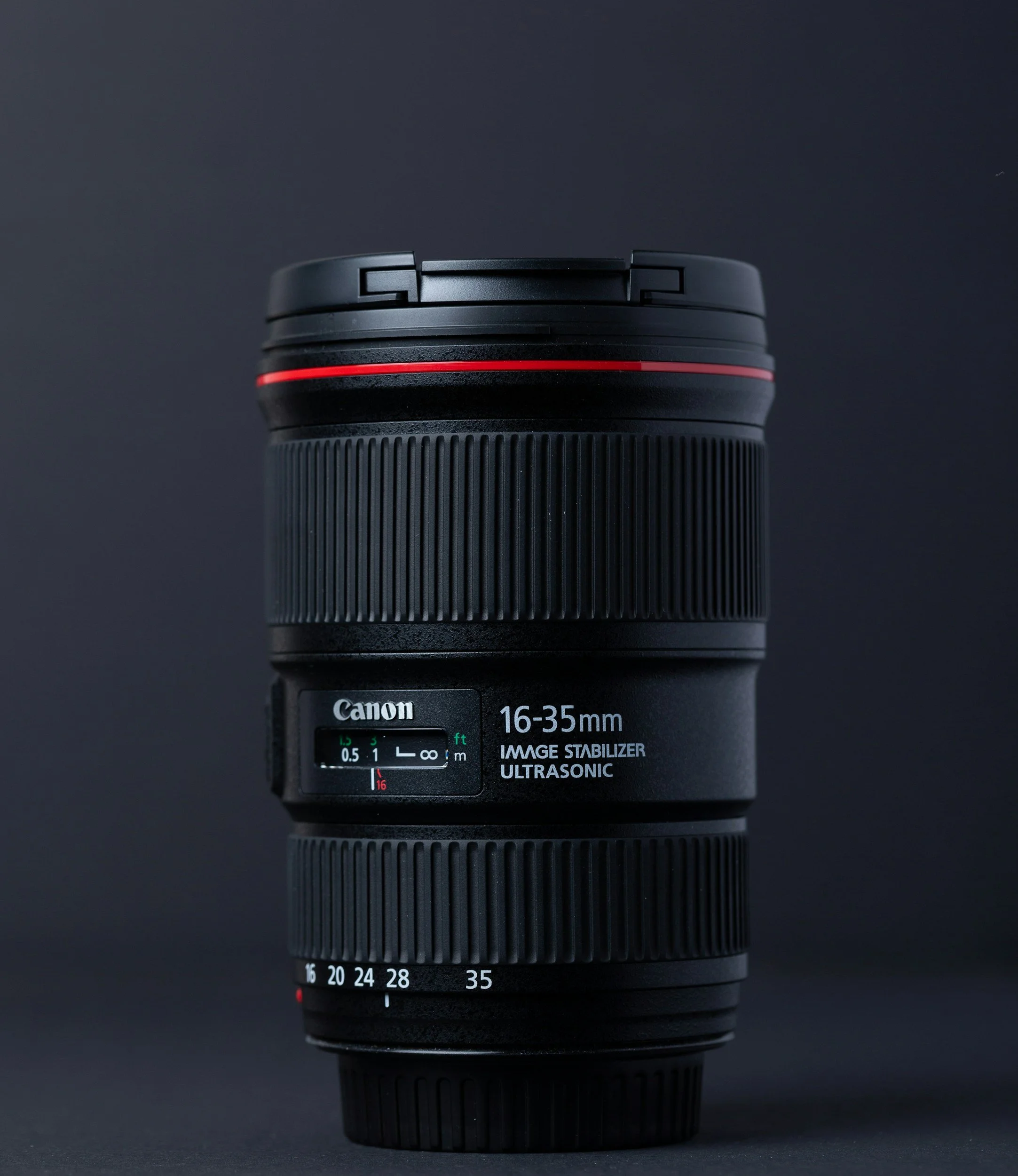
The Canon EF 16-35mm f/4L IS USM is a favourite among landscape photographers who want sharp wide-angle performance without the price tag of the f/2.8 version. In this review, I take a closer look at the build quality, image stabilisation, sharpness, and real-world performance of the 16-35mm f/4L, exploring why it’s often considered one of the best wide-angle zooms in the Canon EF lineup.
I am REALLY late to the party with my purchase of this lens, it was released in 2014, way before I had even picked up a camera and started to take it seriously for the first time, but it is a lens I have wanted to get my hands on for a long time, so when I found a “Like New” copy of this lens on MPB.COM, it wasn’t long until it was on its way to me. I did however, order late on Thursday and missed the deadline for next day delivery, but was pleasantly surprised to be told that it was going to be delivered on a Sunday.
This lens has been on the market for well over 10 years now, and what I want to explore and try to answer in this blog is the question of whether or not you should go and spend your money on this lens in 2025?
So, why buy the f/4 version, when the f/2.8 MK III version exists and people rave about it? There were a number of considerations for me here. First of all the weight, I am carrying this lens about with me a lot and every gram/ounce of weight I can save is really important to me, the f/4 comes in at 615g, which is over 150 grams lighter than its wider apertured counterpart.
I also don’t need the extra stops of light/depth of field that the wider aperture will afford me. Like I said in my blog about Landscape Photography in Lake District vs Cityscape Photography in London, I am less focused on shallow depths of field and much more concerned with getting images that are sharp. This lens still gets me the shallow depth of field when I want it, but there are some obvious caveats as to how I am able to go about it.
There’s also the price difference, we all know that faster lenses = more expensive, and the difference between these two lenses is in the order of £420, when you look at lenses in ‘like new’ condition. Brand new, the f/4 version is still being sold by Canon for in excess of £1400 so if you can buy second hand and find a decent condition one, there is a huge saving to be made.
Finally, the f/4 version of this lens boasts up to four stops of image stabilisation, which is something that none of the three iterations of the f/2.8 lens are equipped with. This is a real boost for some of those handheld shots where you just don’t have the time (or the inclination) to get out the tripod!
I’m going to be using this lens on the front on an APSC crop sensor (Canon 80D, with a crop factor of x1.6), so in effect, the lens is going to have a focal length of 25.6-56mm. This still gives me good coverage across the full range of focal lengths when held up to the rest of the lenses in my arsenal. The bonus here is that when I finally get round to upgrading to a mirrorless full frame, I will still have a great set of lenses to use on my new camera, which will work in combination with the camera and an EF to RF mount converter.
One thing I did find difficult when I was researching this lens before buying it was trying to find some sample raw files to have a look at, so I’ve linked some at the end of this blog that you can download and have a play around with before you decide to commit if you so wish.
The files still have the exif information in them so you will be able to see what settings they were taken with.
What’s in the box?
You’ll get the lens itself, a bag to store it in (I like these bags that Canon supply, and they provide another level of protection when it’s getting knocked about in the hills), the EW-83 lens hood, lens caps for the front and rear of the lens and an instruction manual.
As you would expect from Canon, the lens is well packaged and everything arrived in one piece!
Please remember that this lens was purchased in ‘like new’ condition. This means that it came with the original box and all of the original accessories. What you receive is going to be dependent upon the condition of the item you buy - do your research and make sure you’re not disappointed with what you receive.
My experience with the lens.
This is a well made lens which feels great in the hand, has a solid, metal lens mount, as you would expect from Canon ‘L’ series lenses. It’s also (in my opinion!) a really good looking piece of kit! I’m impressed with how light it feels. It’s all well and good having the weight displayed in front of you on a screen, but to hold it and experience how light it is really brings it home.
Some of the quick stuff: it fits well on the mount on your camera, it is really well made and the autofocus system is great, if a little noisy at times, which could be annoying if you are using this to shoot a lot of video, especially if you have a microphone mounted to your camera. Everything feels good in the hand, the focus and zoom rings are easily reachable and have good grips on them to get you to where you need to be. The buttons on the lens to turn on/off the autofocus and I.S. are situated where you would expect and function in the same manner as every other lens with these options. The distance scale is clear and easy to read.
The supplied lens hood has a fairly slim profile when it’s attached to the lens, is easy to fix in place and pops off quickly with a quick-release ‘switch’.
I’ve taken some shots with this, both indoors and outdoors and had a good level of success with some of these images. I’ve shot it wide open, stopped it down as far as it will go to f/22 and at a variety of focal lengths. At f/8 you get the lens at its sharpest across the whole range of focal lengths, there is a good balance of edge sharpness and centre sharpness at this aperture.
As you get down below f/16, you do start to see some diffraction in the finer details. I haven’t noticed a whole lot of chromatic aberration with this lens, which should mean that any that you do encounter (my research tells me you might get some in particularly high contrast images), should be easily fixed in post. The lens profiles for this piece of kit are built into Lightroom, and they’ve had well over 10 years to perfect them!
One thing I haven’t been able to test is the weather sealing, we’ve been having an unusually long dry period here in The Lake District, so I can confirm that I have been out in the dustiness of my local nature reserve and the dust proofing has held up well, but not even I am silly enough to sit and purposefully throw/spray water at my new favourite toy!
Whilst this isn’t a dedicated macro lens, it does a have short minimum focus distance of 0.28metres (just over 0.9 feet). This means that you’re going to be able to get some great close ups. If you’re thinking about this lens just for macro photography then there are better options out there, unless you’re going to invest in extension tubes but this will be at the expense of losing this lens’s great autofocus.
Wide open at f/4, you can still get bokeh, if that’s your thing, but you will need to get much closer to your subject than you would if you had a wider f/stop. The quality of the bokeh however, is great - you’re just not getting the buttery smoothness you would from a wider aperture.
There is some slight vignetting when you use filters on this lens at wider angles. The filter thread is 77mm (if you own a 24-105mm f/4 already then you probably already have this size in your kit) and works well - no cross threading issues so far. The vignetting it easily removed in Lightroom with no adverse affects on your final image.
Who’s it for?
This lens is going to be valuable to anyone who is serious about their landscape photography. The sharpness across the whole focal range is fantastic (I think only my primes are sharper), especially at f/8 which is something which I really appreciate. The I.S. is solid and will allow you to take handheld shots at longer shutter speeds that you may not have been able to achieve previously - I wish my 70-200mm f/4L had it as well!
Interior and architectural shooters will enjoy the lightweight feel of the lens, alongside side the well controlled distortion (barrel at the wide end and pincushion at the narrow end) means that getting solid, straight and even lines is something which is quickly and easily achievable.
The focal length is great for vlogging, giving you a wide enough angle to be able to get context in your shots, with the ability to punch in for that all important close-up! The light weight of this lens is going to mean that it’s easily balance-able on a gimbal and isn’t going to push you too close to its weight limit.
Videographers and vloggers will appreciate this lens, but should be aware of the noise from the autofocus and IS motors, so an off camera mic is likely to be required to completely eliminate it.
Should you buy this lens in 2025?
Yes. It’s quite a straightforward answer for me. I like that to an extent, it is ‘futureproof’ insomuch as if you upgrade to another Canon (mirrorless) system, you will still be able to use it, but will need to by the RF mount adapter. But hey, when you’re switching, it’s nice to have a set of great quality lenses ready to go with only the added expense of the adapter ring to buy.
If you’re looking to add something to your lens setup to replace your kit lens, then this is a great option, but it won’t give you the reach you’re used to with the 18-55mm. If you’re looking for tighter compositions, you might want to keep hold of this for the time being or have plans to invest in something which will give you that extra reach at the long end.
This is a sharp lens, especially in that f/8 sweet spot. You’re not going to be disappointed with the sharpness of the images you’re going to be able to capture. You’ll love the feel of it, the build quality and the autofocus. Oh, and it looks insanely cool on the front of your camera!
Pros and Cons
Pros:
Light weight
Fully weather sealed with Fluorine coated front element.
Lower Price than the f/2.8, especially when buying second hand.
Super sharp across the whole focal range.
Image stablisation (4 stops) supports hand-held shooting at longer shutter speeds.
Cons
Some users, especially those who shoot in low light conditions often may find the f/4 aperture frustrating/constraining.
Less light gathering for astrophotography work.
The autofocus and IS motors, despite being engineered to be silent, are often audible and this could impact work, especially if you are shooting video using autofocus modes.
Some minor vignetting when using filters at wider angles.
The Nerdy Stuff
Focal Length: 16–35 mm (full-frame compatible)
Maximum Aperture: f/4 (constant across the zoom range)
Minimum Aperture: f/22
Lens Construction: 16 elements in 12 groups
Angle of View (Diagonal): 108°10′ – 63°
Focus System: Inner focusing with ring-type USM for fast, silent, and precise AF
Closest Focusing Distance: 0.28 m (0.92 ft)
Filter Thread Size: 77 mm
Image Stabilisation: Yes – up to 4 stops of correction
Weight: Approx. 615 g (21.7 oz)
Dimensions: 83 mm max diameter × 114 mm length (4.4 in)
Coatings: Anti-ghosting coatings plus fluorine on front and rear elements for dust and water resistance
Weather Sealing: Yes – dust and moisture resistant for outdoor shooting
Example Raw Files
You’ll need to right click each link and select “download linked file”, to save this file to your computer.
Raw Files 1-6 are images of a toy car taken in my studio against a blue backdrop and ISO 2000
Raw Files 7-12 are landscape shots.
If you’d like to support the blog and help me keep producing Lake District photography content, honest gear reviews and regular website updates, you can do so via my Buy Me a Coffee page. Keeping everything running smoothly takes time, and your support makes a real difference. Thank you.
