My Photography Blog
Welcome to the Chris Kendrick Photography Blog, where I share the stories, challenges and inspirations behind shooting Lake District landscapes and working as a Cumbria-based photographer. Alongside behind-the-scenes reflections from the fells and lakes, you'll also find honest photography gear reviews, covering the cameras, lenses and accessories that genuinely perform in real Lake District conditions. Whether you’re passionate about landscape photography, exploring Cumbria’s scenery, building your kit, or simply curious about the craft, there’s something here for you.
Some posts include affiliate links; thank you if you choose to support the blog through a qualifying purchase. If there’s a topic or piece of gear you’d like me to cover, let me know. Enjoy exploring!
Enjoy!
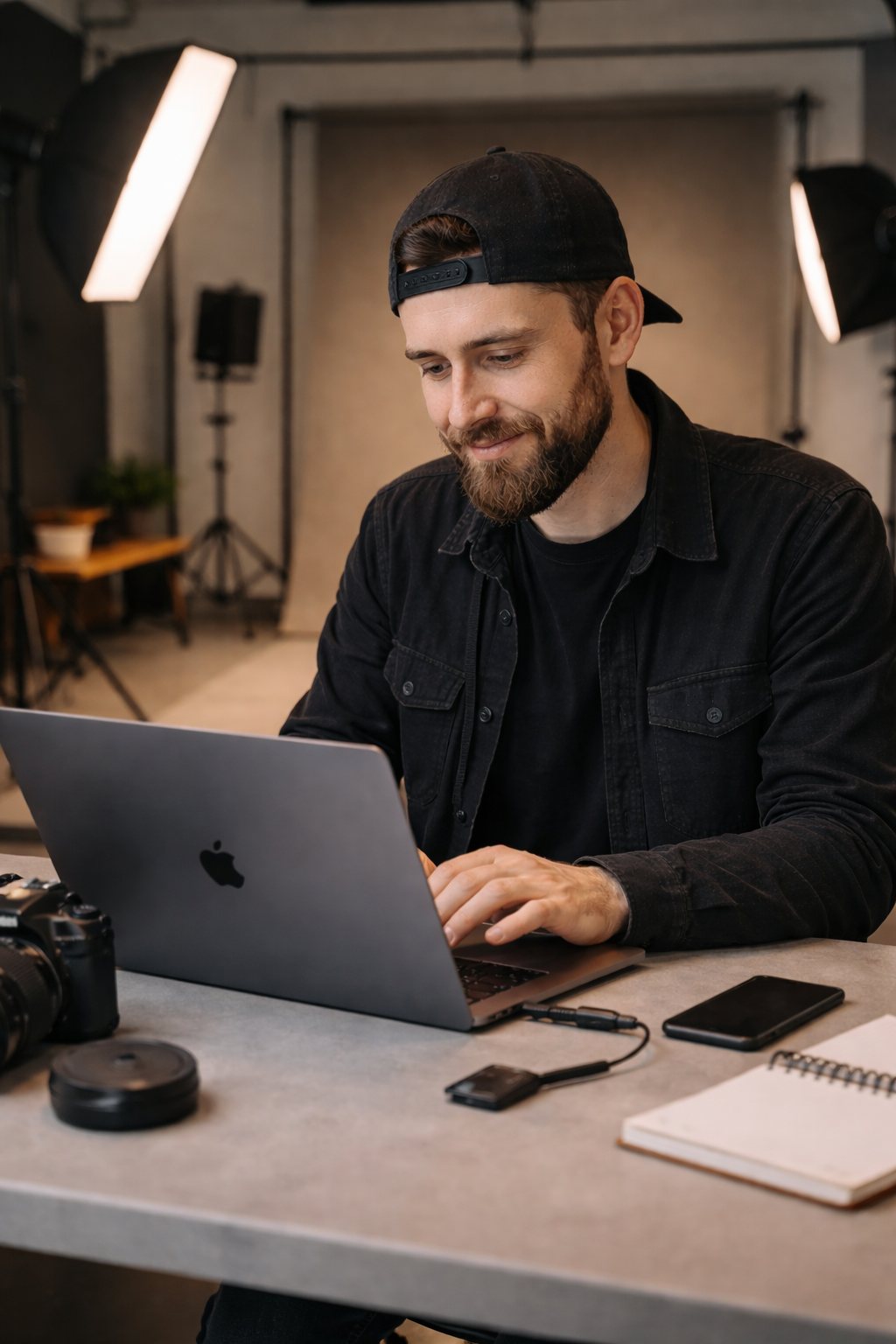
Why You Need a Website as a Landscape Photographer.
In an age of social media and instant sharing, it’s easy to question whether a dedicated website is still necessary for landscape photographers. Platforms come and go, algorithms change overnight, and your work is always competing for attention. A website gives you something social media never can: control, permanence, and credibility.
In this article, I explore why having a website matters, even if photography isn’t your full-time job. From building a professional online presence and showcasing your portfolio properly, to improving discoverability through search and creating opportunities for print sales, licensing, or commissions, a website acts as a central hub for your work. If you’re serious about your photography and want to future-proof it, a website remains one of the most valuable tools you can invest in.
Having a website as a landscape photographer isn’t about chasing followers or pretending photography is a business. For me, it’s about focus, ownership, and having a place that reflects how I want my work to be seen. This post isn’t a tutorial — it’s an honest look at what my website does, why I use it, and what it actually takes to keep it running.
This blog has not been sponsored by Squarespace, which is a fantastic all in one website building platform which requires no knowledge of coding to create incredible looking websites with a variety of templates to suit every use case. If you need a website, make your next move with Squarespace.
See what I did there? Heard it or something very similar before? Chances are, that if you have even a passing interest in landscape photography or live with someone who does, that you have watched/heard a lot of YouTube videos where this ad-read pops up at the start of the video or somewhere in the middle of the main body of the video. And now you have ended up here, on my site that I have built, and host, on Squarespace. What are the chances?!
TL;DR
There’s no single reason landscape photographers should have a website — and having one doesn’t automatically make you better or more successful. For me, a website provides focus, ownership, and a permanent home for my work, whilst social media supports it by driving traffic. It takes time, effort, and money, but if you’re intentional about how you use it, a website can become a valuable foundation for your photography.
Website vs Social Media: What’s the Difference for Landscape Photographers?
Social media platforms are great for sharing work quickly and reaching new people, but they come with limitations that many photographers only notice over time.
Your images are displayed in a feed alongside thousands of others, often heavily cropped or compressed, and their visibility is controlled by algorithms you have no influence over. A post that performs well one week may be effectively invisible the next, and on some platforms, this invisibility might come within few hours. You’re really at the mercy of the algorithms on social media.
A website, by contrast, gives you full control. You decide how your images are presented, in what order, and at what size. There’s no algorithm deciding who sees your work, and your portfolio isn’t buried under newer posts. A website also allows people to discover your photography through search engines, not just social feeds, making it a long-term asset rather than a fleeting one.
In short, social media is rented space, while a website is something you own (but that you host in rented space). Used together, they work best: social platforms drive attention, while your website provides context, credibility, and a permanent home for your work.
I have a website, I have done for about 5 years, but have only recently really started to build up what I am doing here and using it to its full potential. After a quick read of this post before publishing it, I have realised that I could have titled this “Do you need a website as a landscape photographer?” and that would have been an equally adequate and appropriate title!
But do you need one? How do you know if you need one? I hope that this blog helps you to answer these questions.
Why Do I Use Squarespace?
I haven’t always been a Squarespace user. I used to use Wordpress and Wix when I first started out. When I lived in London, I was running a (now defunct) blog on Wordpress and the first iterations of my photography website were built and hosted on Wix. I ended up moving to Squarespace quite quickly after I had used a free trial I found on a YouTube channel.
I preferred the whole experience on here and found the UI to be much more intuitive. It was also easier for me to set up my shop and get payments sent to me. For me, this is a good experience and it makes doing things like writing this blog much easier.
If I could change one thing, I would like it if my blog had much more of the drag and drop functionality that the other parts of my site have have, but I think that’s down to the website template I use not supporting the versions of Squarespace that have rolled out since, this is one of the reasons that the blog always appears the way that it does.
What Can You Have on Your Website?
I know this is cliché, but the sky is the limit when it comes to what you choose to put on your site. You can choose the sections that you want and fully customise this to what it is that you want to show. If you scroll to the top of this page, you will see the sections that I have chosen in the site header, but ultimately, what I want to be able to do can be boiled down into the following categories (in no particular order): Sell prints, sell workshops, generate leads, show my work, write this blog and build my client base. Having this website helps me to do a lot of this all in one place. Of course, this isn’t the whole story, other things such as networking and completing the right kind of work are also important, but having this website allows me to do a lot of this in a way that is more passive than having to find time which I often don’t have to get out and network and work with other people.
How Can I Make Money from My Website?
The truth is, this is the hardest bit. Being a landscape photographer in The Lake District, means that I am but a small fish in a very large, very well stocked pond. Competition is tough and it’s hard to sell prints and hard to sell workshops. This its largely down to the time in which we are living and the current socio-political climate; people don’t have a whole bunch of spare money to spend on luxuries like photography workshops and buying prints to hang on their walls.
I also do things such as including Amazon affiliate links in things like my blog and on the ‘my gear’ section of the site. These are run through the Amazon Affiliates programme, and what it means is that if someone clicks a link on the site and then makes a qualifying purchase on Amazon, I can potentially (not always), make money from the purchase at no extra cost to the purchaser. This is a small amount of money, usually around 3% of the total purchase price per item (more for some types of items and less for others) and this gets paid out at the end of each month that you hit the payout threshold (if you don’t it roles over to the next month so you don’t lose anything). It is not a big earner. Anything that I do make goes towards buying gear that I will use and can review on here.
Another way I encourage people to support the blog is via my Buy Me a Coffee page. Not a massive money-spinner this one, but anything I make goes straight back into creating more content for the website and supports writing this blog.
Selling workshops has been by far my best earner on the website, but having a full time job outside of photography makes it difficult for me to fit in with when people are available - a lot of the time people are on holiday in the Lake District and when they are free, I am at work. That said, I will always try to fit people in and will do my best to work around the schedules. It’s all about being as flexible as my pre existing commitments will allow me to be. This is not a website problem, this is a ‘Chris problem’.
The amount of money I make is wildly disprotionate (and not in a good way!) to the amount of time I put into things such as maintaining and updating the website as a whole, writing blogs like this one and testing and reviewing gear. It’s a poor return on investment, but sticking with it and trying to improve whilst at the same time, trying to help others to do the same is what spurs me on to keep doing it.
So What Does My Website Do?
In short, my website is the foundation of my photography, with social media working to support and point people towards it.
For me, my website acts as a central shopfront for my photography. It’s where I can show my work properly in the way that I want to show it (i.e. not constrained by how social media thinks I should show it), promote print sales and workshops, and talk about something I genuinely love doing. It gives people a clear place to view my images, get in touch, make purchases, and read information that I hope they’ll find useful and encouraging.
It also gives me a real sense of focus. Social media plays a big role in modern photography, and keeping my channels up to date helps show a more immediate, behind-the-scenes view of what I’m working on. Used alongside the website, social media becomes a way of driving traffic rather than replacing it — guiding people towards more in-depth content, galleries, and resources that live on the site. Together, they work best when the website acts as the foundation and social media supports it.
Does it Take Much Maintaining?
Yes. And no. Writing the blog is the most time consuming thing I have to think about, at the time of writing this (Jan 2026), I have enough posts scheduled to take me up to the end of March, which is about when this post will go live, assuming I manage to get it finished in time!
Each one takes between one and two hours to write, find images for, sort out the SEO and the excerpts, take care of the accessibility and everything else that I need to think about.
So if you think that this will be the 15th blog of this year, that’s 30 hours(ish) worth of time that I have already put into this, and that’s just the writing. Then there’s the research and product testing that goes on top of this and it soon starts to add up in terms of commitment.
Let’s be clear though, I do this because I enjoy doing it, no one is making me do it and no one is directly affected by it if I don’t do it, doing this part of the website is very much a labour of love!
The initial set-up of the site was really easy, the Squarespace templates are really well designed and well made and it makes setting up a really simple, straightforward process.
You don’t need to know how to write code (though if you can or you know how to get AI to do it for you (you may have noticed some of the images in the blogs are of an AI generated character), then you can include it on your site) and you even have a plethora of stock images available to you, which can be a real timesaver if you’re in a pinch or you are writing about something you haven’t photographed - see my blog about bucket list photography locations for an example of how I have used stock images in this site.
Adding images to my portfolio page is really simple, all I need to do is to upload the images and Squarespace does all of the heavy lifting for me. I just need to decide how I want the images to be displayed on my site.
The print shop I run on here does take a lot of maintaining, I need to refresh the images that are on there, price them, upload the pictures I want to sell and track all of the data that this page gathers. Finding a way to display them in way that is useful to customers took some time but I finally managed to sort something. There are paid, 3rd party services that can do this for you, but I wanted to do something that was free and I think I have managed to sort this now. The store is currently closed, because updating it takes time and I want to make sure that I have it just right when I am ready to reopen it.
How Can I Get Better at Running my Wesbite.
I am lucky that in the UK (specifically England), there is an organisation called “Free Courses in England”, which allows you to take accredited, RQF level 2 and 3 courses for free. This isn’t a plug, it’s just something that based on my experience, I thought was worth sharing.
I have completed a number of these, but the ones that were very useful for me were the Level 2 Certificate in Digital Marketing and the Level 2 Certificate in Managing a Business Startup. The former really helped me to understand SEO (Search Engine Optimisation), which is how Google recognises your content and then ranks it so that it can be displayed to people who have searched for things using their service. Having completed this course, I think it is part of the reason that several of the blog posts appear near the top of the search engine results pages for their related search terms and two of the pages are even right at the very top!
The Business Startups course gave me a lot of food for thought, especially around data protection. If you decide to collect and store user data on your website (such as through a contact form or for newsletter signups) then you need to make sure that you are doing this in a way which is compliant with the relevant laws for your country/territory. This course really highlighted some of the best practices for me and they are things that I make sure I do to protect both user data and myself - get this wrong and their can be big trouble!
So Why Should You Have a Website?
I’m going to nick one of Squarespace’s slogans for this, but “A website makes it real”.
What does this even mean for you though? For me, it meant that I had a real focus and something to aim for, I had another reason to take photos other than for the sheer love of wanting to create images that I liked. I haven’t shifted my mindset in any way to take images that I think other people will like, that’s not why I do it. People are fickle and for every one person who likes one of my images enough to buy it, there will be at least 100 who don’t like it and that’s just part of being a photographer, or for that matter, any kind of artist be that visual or other wise.
Having a website gives you somewhere to showcase what you think is your best work, it gives you a way to engage with other people who like what you do, outside of the social media mainstream. It allows you to promote your work to new audiences and find new ways of doing what you do.
The decision to have a website is one that is purely personal. Having one doesn’t automatically make you a better photographer, but if you build it and maintain it, it can be a way of helping to develop your skills, not just in photography, but in other areas of the photography business that can help you to grow both your photography and other areas of your practice. It will certainly make you more resilient!
It might be that you just want to share your work with the world, which is a great thing to do. You might want to build a community of photographers, something which I am trying to do this year and have already started working on behind the scenes. You might want to try and sell prints or presets or make money in another way. The choice is purely down to you and whatever choice you make will be the right one for you and a perfectly valid choice at that.
Just be warned, that there is a cost implication to all of this, not just monetarily, but also in time and your time is valuable (this blog post alone has taken almost two hours of my time, and I haven’t done the SEO stuff on it yet). But, in terms of cost you will need to think about buying your domain and paying money to renew it each year (think of it like rent, someone owns that space on the internet and you have to pay to use it) and then you will need to host your site as well, which is another cost to consider. It’s a competitive space, so there are often good deals on which help to get you started.
If you want a bespoke email address and not just a generic @gmail.com (other email services are available) then there’s a charge for that as well, it’s a small one, but it’s still a charge. My bespoke/vanity email is still just a Gmail account, when I log in, it’s still like ‘normal’ Gmail, I just have a different bit after the @ sign! You might want to consider this last option if you’re trying to take this whole website thing seriously as having an email which is linked to your website not only looks really professional, but it also helps to engender trust with your audience. There’s not requirement to do this, and plenty of businesses function perfectly adequately without them - this is all down to choice and how much money you are prepared to spend on what becomes an extension of your photography.
Final Thoughts
Having a website isn’t about chasing validation, followers, or turning photography into something it doesn’t need to be. It’s about intention. It gives you a place to slow things down, to present your work on your own terms, and to build something that reflects how you see photography — not how an algorithm does.
Whether you use a website to share images, write, sell work, or simply document what you’re doing, the value comes from committing to it over time. It won’t make you a better photographer overnight, but it can help you become a more focused and resilient one. And for me, that alone has made it worthwhile.
Thanks for reading, I hope you found this useful/insightful! If you’d like to be the first hear about new blogs and reviews and to keep up to date with what I am doing and see my latest work, please sign to my mailing list by clicking here.
If you’d like to support the blog and help me keep producing Lake District photography content, honest gear reviews and regular website updates, you can do so via my Buy Me a Coffee page. Keeping everything running smoothly takes time, and your support makes a real difference. Thank you.