My Photography Blog
Welcome to the Chris Kendrick Photography Blog, where I share the stories, challenges and inspirations behind shooting Lake District landscapes and working as a Cumbria-based photographer. Alongside behind-the-scenes reflections from the fells and lakes, you'll also find honest photography gear reviews, covering the cameras, lenses and accessories that genuinely perform in real Lake District conditions. Whether you’re passionate about landscape photography, exploring Cumbria’s scenery, building your kit, or simply curious about the craft, there’s something here for you.
Some posts include affiliate links; thank you if you choose to support the blog through a qualifying purchase. If there’s a topic or piece of gear you’d like me to cover, let me know. Enjoy exploring!
Enjoy!
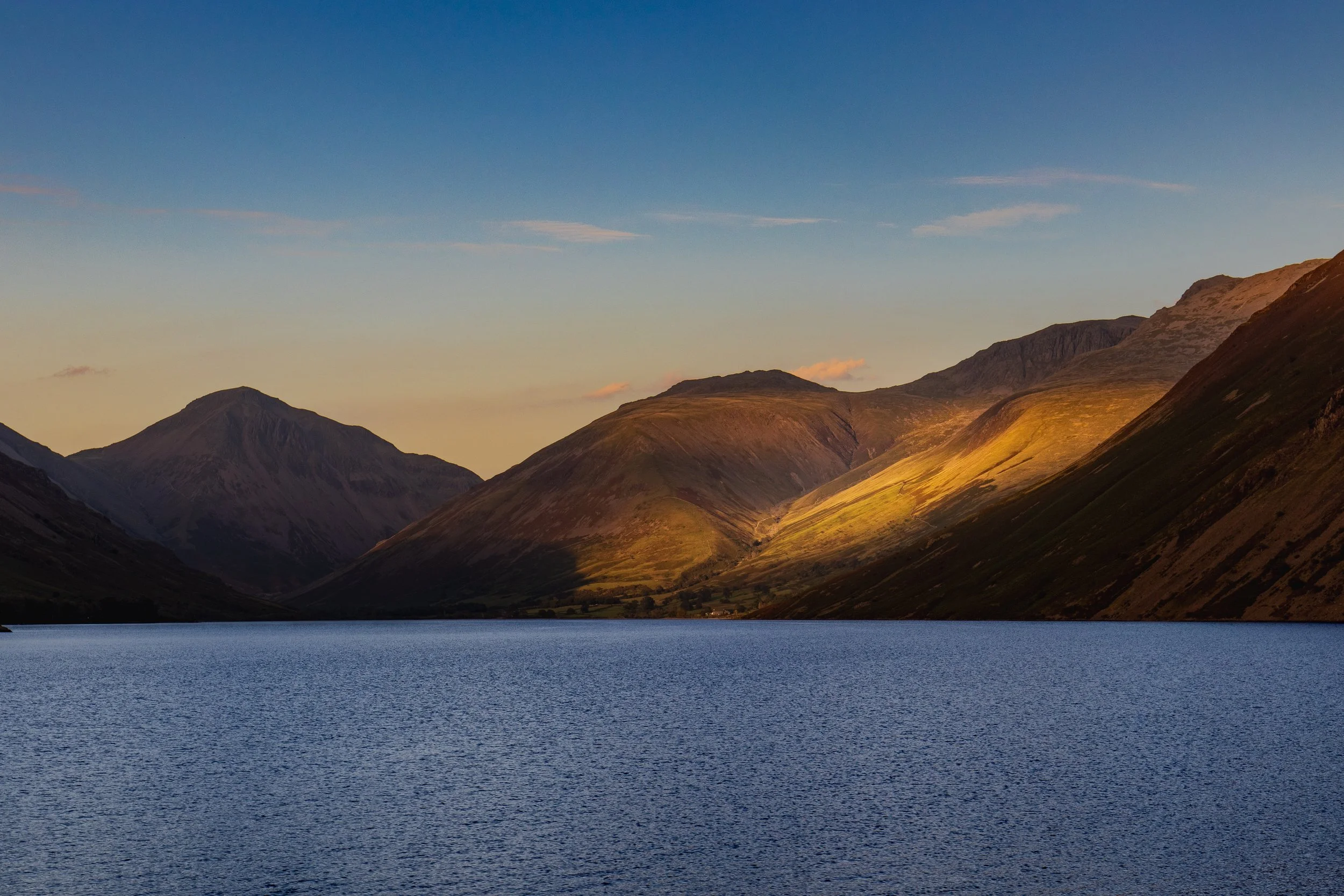
What Are The Best Camera Settings for Landscape Photography?
When photographers ask “what are the best settings for landscape photography?”, they’re often looking for a simple checklist. The reality is that there’s no single set of perfect settings that works for every landscape scene. Light, weather, subject movement, time of day, and creative intent all influence the choices we make behind the camera.
In this guide, I explain why fixed “best settings” don’t really exist, and instead break down the decision-making process photographers use when choosing aperture, shutter speed, ISO, and focus. By understanding how these elements interact with the scene in front of you, you’ll be able to confidently select the right settings for any landscape, rather than relying on guesswork or presets.
This is a question I get asked a lot, and I mean A LOT. Not just about landscape photography, but about all sorts of different photography - what are the best settings for portraits/ICM/product/wildlife… the list goes on.
The bad news for some people is that there is no ‘best’ settings for any of these types of photography. The best settings for the photo that you are taking are the ones that you need to be able to take the photo you want to take.
Let me unpack this a little…
For some situations, there are preferred settings. In a landscape shot, I am going to want use the sharpest part of my lens, and for the lenses that I have, that’s usually somewhere around the f/8 mark.
This is going, to some extent, dictate the rest of my settings as I am making the aperture smaller; other things are going to need to change in order to compensate. If you’re new to photography, then reading my blog about the exposure triangle, is going to help you to really understand what I am talking about in this entry.
Once I have set my aperture, I have a number of things I want to consider… do I want to freeze motion or do I want motion blur? Do I need to inject a ton of ISO into the image to get my desired exposure length? Does the ISO value I choose mean that I am going to be adding a load of noise/grain into my image that is going to ruin it?
Even though I want to use the f/8 aperture, this might not be possible and I may need to make some compromises.
It may even mean that to get my desired level of sharpness across the whole image, I need to consider focus stacking.
There’s a lot going on in just this one scenario.
Thinking again about the original question, “what are the best settings for landscape photography?”, we then need to remember that as landscape photographers, everything we do is at the mercy of that staple of British conversation, the weather. As a landscape photographer in The Lake District, I know only too well the perils of the changeable Lake District weather and understand that at certain times in the year, it isn’t uncommon to experience all four seasons in one day! However, the most common thing you are going to come across is changing light, no matter where you are.
Sometimes the light will be bright, you’ve got your camera settings dialled in and made your image. You want to take another couple of images at the same location, or of the same subject, but the light has changed, the clouds have positioned themselves firmly in front of the sun and everything that you have just done correctly to nail the first exposure, now needs to change. This is normal and for me, it’s one of the challenges that makes this pursuit so much fun!
But I’m Not a Landscape Photographer!
To be quite frank, this doesn’t matter. What I have just said can apply to all manner of photography genres, particularly those where you have little-to-no control over what the light is doing, because you are shooting outside and are at the mercy of Mother Nature.
To give another example…
I used to live in London and was used to shooting in low light - night photography was a real staple for me, as were shots of “bus trails” and light trails. For a time, I was obsessed with taking cityscape images, with long exposure times to get either light trails or capture the motion blur of a bus that was driving through my scene.
After much experimentation, I figured out that for me, on my camera with my lenses, the optimum exposure time for a perfectly (in my opinion!) blurry bus was around 0.3 seconds. Notice that I said “around” in the last sentence? This is because it wasn’t always 0.3 seconds, there are a lot variables at play, not least the speed of the bus that was driving through your scene. If it was going too fast for my settings I wouldn’t get what I wanted. If it was going to slowly for my settings, it wouldn’t make it out of my scene and I would end up with something that I didn’t want.
What about portraits?
Surely for portraits, what you need is a fast lens and then just to shoot everything at f/1.8 also that you get good bokeh? Not in my experience.
Bokeh is great, we all love the way it looks, be that light orbs in the background of our images, or a blurry background that makes your subject ‘pop’ and creates some separation from background.
The issue is the focus plane. I try to imagine the focus plane of my image as an invisible entity that stretches from the front to the back of my scene. The higher my f number, the deeper the depth of field and the more of the image will be in focus.
But when it comes to shooting portraits, you want to be sure that all of your subject is in focus. I have found in my experience, the shallower the depth of field, the less of my subject is in focus and by the time I have looked beyond the focus of someone’s nose, I am starting to see a fall off in sharpness and by the time I have moved along that invisible plain to their ears, I am really not seeing as much sharpness as I should.
In the portrait scenario, your settings are not only going to be dictated to you by the amount of light that you have available, but also by your distance from your subject, and further more, your subject’s distance from the background. You might need to adjust your settings, your positioning and your subject’s positioning to make sure you are getting the level of focus you want and the correct exposure that you need.
If you’re doing headshots in a controlled lighting environment, against a backdrop and you can have your subjects stood on a mark, then this is going to be a little bit easier to figure out and to maintain your settings.
But if, for example, you are trying to tell a story in your images, then you are going to want completely different settings. Let’s say for example you are taking a series of portraits of people that tell us about the job they do and you are taking a portrait of a fisherman who works on a boat. You’re shooting on location at a harbour and his boat is moored up.
In this setting, you could set your aperture to f/1.2 and have a really buttery-smooth, bokeh’d background. Or… you could stop down your aperture ring to give you more of the background in focus so that you can see the harbour and the boat behind the fishermen. All of a sudden you have gone from a photograph of man who looks and dresses a bit like a fisherman, to a man who is a fisherman, with his workplace and working environment behind him to really sell the concept and to help to tell the story. Context, sometimes, is everything.
How About In The Studio?
Again, it’s a similar story here, but you do have much more control. This is because in a studio, you have full control over the lights - if you have a decent set of lights/strobes/flashes etc then you can control the brightness/intensity of the light, how soft or hard the light is (with the use of modifiers), how long it lasts for, where it is coming from and its distance from your subject, the way the light is diffused, the colour of the light… the list could go on.
What this means is that you could set your camera up and change the lighting settings or you could adjust your camera to the lighting scenario depending on what it is you are going for, but generally, if you’re changing one setting, you are going to need change something else.
In the studio, there is not a single set of perfect settings, the settings you need are going to be dependent on the look you are going for, what you are shooting (shape, size, etc) and how you need to present the final images to the client.
We are however, always looking for an image that is sharp, so our aperture is likely to be the overriding factor in our decision making here.
There are preferred settings…
… but there are no best settings!
Your preferred settings are the ones that you prefer. It doesn’t mean that they are the best ones - they might not be someone else’s. Think of it like this: If there were a set of best settings for every scenario, someone would have written the book, we’d all have a copy and we’d all be shooting the same images in the same way.
We’d also all be reading the book and thinking to ourselves “well they’re not the best settings for that situation, because what about that photo of x that I took at y”.
There’d be umpteen YouTube videos on the topic of “why I disagree with the best settings manual and what I do instead”. You see my point? These are personal, artistic choices/decisions based on an infinite number of possible scenarios with an infinite number of desired outcomes.
As you have probably gathered by now, there isn’t one single set of best settings for each of the situations you are looking to shoot. The best settings are dictated by where you are, the time of the day, the weather, the kit that you are shooting with and what your final intentions are.
Some of this is also going to be dictated by personal taste, especially when it comes to the creative aspects of your own work (if you’re doing client work then a big part of the creativity is going to be dictated to you, but remember that you’ve been hired for the way that you shoot, so your creativity still plays a role).
The best way to ensure that you can get the correct settings for your intended outcome is to practice, learn your camera and what it can do, what it is capable of and how to make it do what you want it to and how to programme the settings effectively. Spend some time learning about lighting, experiment and always have a project on the go so that you’re actively creating.
Thanks for reading, I hope you found this useful/insightful! If you’d like to be the first hear about new blogs and reviews and to keep up to date with what I am doing and see my latest work, please consider spending a few moments signing up to my newsletter.
If you’d like to support the blog and help me keep producing Lake District photography content, honest gear reviews and regular website updates, you can do so via my Buy Me a Coffee page. Keeping everything running smoothly takes time, and your support makes a real difference. Thank you.
10 Things I Wish I Knew When I Started Photography.
Beginner Photography Tips from Someone Who’s Been There
This blog contains Amazon affiliate links. As an Amazon affiliate, I earn from qualifying purchases. This is a great way for you to support me! Thanks!
I have been working on a lot of things for beginner photographers in the last few weeks and a few people have had a read of my blog from last week, Essential Photography Gear for Beginners: What You Really Need to Get Started. https://chriskendrickphoto.co.uk/blog/what-gear-do-you-need-as-a-beginner-photographer
To this end, I thought I would go one further and think more about beginner photography and this led me to think about the things I wish I knew when I started taking photos.
This turned into quite a long list (with some repetition!), which I have tried to distil into ten points below. I will try and keep it short and simple, but I do have habit of trying to share as much as possible - it’s all about helping each other. I’m not a gate keeper!
So let’s jump into 10 Things I Wish I Knew When I Started Photography…
1. You Don’t Need an Expensive Camera to Take Great Photos
This one kind of touches on the “Does Gear Matter Question”. The answer to that, as we know, is yes. But also a resounding no. But, it does a bit and “categorically no”.
Ultimately, what matters is that you have some gear AND you know how to use it. Some of the best time you can spend as a photographer is time getting to know your camera (or the camera app on your phone!), what the buttons do, and more importantly, where they are. You will miss shots if you’re spending ages trying to remember what the buttons do and where they are. Its also well worth learning your menus, where to find things and what they all do.
But this doesn’t answer the question. The main point in the previous paragraph is “that you have some gear”. It doesn’t matter what that gear is, as long as it works and you know what you’re doing with it.
You can take a great photo on any camera. It doesn’t matter whether its a Hasselblad X2D or an Canon R5 MKII. Breson didn’t have either of these. Gilden doesn’t use one. What they do know how to do is to frame a shot, when to take the shot and how to edit the shot to make it exactly what they want.
If you have camera that uses older tech, or you have a camera that is more basic, or you’re using your phone, you can take a great photo.
Good photos mean something. Good photos say something. Good photos tell a story. You achieve a photo that does all of these things with any camera, be that the latest offering from one of the big companies, or a 20 year old DSLR. What matters is what or who you are taking photos of.
This is one of the most important things I have learned. When I started out, I bought the best camera I could afford and paired it with a kit lens. I still have that camera now. I have added more lenses, but I still have that camera and use it most days.
Another way to think about this. In “real life” I am a teacher and I have taught photography at A-Level. The best photography student I ever had, the one who took the best images was the student who had the cheapest camera (not just in their class, but across all 4 classes I taught) and they created some images that were genuinely first rate images. I always remind myself of this when I am looking longingly through the window of my local camera shop.
2. Manual Mode Isn’t as Complicated as It Seems
It really isn’t. It might seem it, but it’s not. I promise. The thing you need to master is the exposure triangle. Conveniently, I have made a blog about the exposure triangle, which you can read here. https://chriskendrickphoto.co.uk/blog/a-beginner-photographers-guide-to-the-exposure-triangle
If you can master the basics of shutter speed, ISO and aperture. Get the hang of this, then you can start to think about white balance and picture profiles (if your camera supports them) and maybe go one step further and start to explore things like long exposure photography and ICM (Intentional Camera Movement).
You should also look into aperture and shutter priority on your camera and learn to use these too.
3. Light Is the Most Important Part of Any Photo
It’s the name of what we do… The word “Photography” is taken from two Ancient Greek words “Photos” meaning light and “graphé” meaning to draw or write. Photography literally means “writing or drawing with light”.
So yeah, light is kind of important! Without it, we can’t take images.
But then we have low light, good light, bad light, soft light, hard light, specular light… and many more.
A good space for us to start is Golden Hour. This is the light we have after sunrise and before sunset. The term Golden is a bit of a misnomer, it can be about an hour, it can be 15 minutes and it’s also really dependent on the weather and atmospheric conditions where you are taking photos. If you’re covered in thick grey cloud, you aren’t going to get amazing golden light, but you will have some lovely soft light to work with.
It doesn’t have to be soft light though. Hard shadows can work really well and add drama to your photos, just look at the work of someone like Fan Ho, for example. He used harsh shadows to great effect in a lot of his work (he also shot on a dual lens reflex camera, not a mirrorless or a DSLR, because they hadn’t even been thought of at this point!)
As you get more confident with your camera, you will find new ways to manipulate the light with long exposure and exposure stacking and this will produce you some awesome results!
Use your weather apps and maybe look at experimenting with apps like PhotoPills. They will help you to decide what the weather might be like at the location you are visiting and will tell you where the sun is going to be in the sky and this will enable you to pick the right place to make the most of the light.
I’m going to include reflections in here as well, because they’re made of light too, right? Reflections are some of my favourite things to include in my shots; I used to live for a good reflection when I lived in the city, and the same is true now I live out in the sticks, they just tend to be a bit bigger in the countryside that in the city. But you don’t need a tarn in the Lake District with the reflection of a mountain, a puddle and tree can work just as well!
4. Composition Can Instantly Improve Your Photos
This is one of the most important things and one of the easiest ways to improve your images, quickly and cheaply.
Composition as both a topic and a concept is HUGE. As a beginner, I didn’t know much about it, let alone the different types of composition. When I started out, I was just taking pictures of things I liked and sticking them in the middle of my frame.
Then I learned about the rule of thirds, leading lines and the golden ratio. There’s more than this, but these are the three that you will hear the most about. You should go and find out about them and start using them - the difference you will see is huge.
5. Editing Helps — But Subtlety Is Key
Editing is one of my favourite things to do. You need to know that it takes practice and you are constantly learning. You can never know everything about editing.
When you first start out, one thing you are likely to do (I know I certainly did!) is to find the saturation, virbance and clarity sliders in Lightroom and drag them all or most of the way towards the right hand send. This will make your colours unnatural and it’s not a desirable look for your photos.
Take your time, practice, look at other photorgapher’s work, watch YouTube videos to learn, but keep it subtle and let it look natural.
When it comes to editing, less is more. Just like this section of the blog!
6. You’ll Take a Lot of Bad Photos — and That’s Fine
Time for clichés.
We learn by making mistakes, so go out and make them. The only stupid mistakes you make are the ones that you don’t learn from (2 clichés already!).
But joking (and clichés ) aside, embrace your mistakes, establish why it’s a mistake and then go out and try again. Rinse and repeat.
(I’ve used stock images in this blog, but this one is mine, it was handheld and the exposure was too long for this method of taking the image, so it’s blurry and there’s camera movement!)
7. Stop Comparing Yourself to Everyone Else
“Be yourself, everyone else is already taken” Oscar Wilde.
This was on the wall in a school I used to work in and it’s stuck with me. It works for so many things in life, but in this instance, it works really well.
Don’t sit and compare your landscape shots to Ansell Adams’ work. Don’t compare your portraits to Annie Leibowitz and don’t compare your still like/commercial photos to Scott Choucino. These are well established professional photographers, have years of experience and have forgotten more about photography than most of us will ever know!
But aside from those I have mentioned above, don’t compare yourself to other photographers on social media. You’re not them and they are not you. Work on your own images and discover your own style!
8. Consistent Practice Beats Occasional Perfection
Use it or lose it. If you’ve ever played and instrument, you will know that you need to practise to get better. Stop practicing and it takes longer to learn the piece. If you’re a sports player and don’t train, you lose the skills you are developing and your fitness decreases and you don’t perform as well.
The same is true with photography. If I go out to shoot and haven’t done so for a couple of weeks, I really notice it and I find that it takes a while to get my eye in and I don’t always know where the camera controls are - this leads to missed shots and missed shot can’t be a good shot or a bad shot!
9. You’ll Start Noticing the World Differently
This sounds like a bit of a cop-out, but it’s true. You’ll notice leading lines, you will notice good light and you will notice that you don’t always have your camera with you when you wish you had - but we all have a camera in our pocket these days anyway, don’t we?
I have lost count of the number of times I have been driving home and have seen amazing light on the fells. The number of times I wish I had my camera with me or the the numbers of times I wished I wasn’t driving at 70mph watching the world zip by the car window is huge.
If you look hard enough, everything can be a photo and as you practice more, you will begin to see that you can find images where you might not have thought there could be one. Even in harsh sunlight (which isn’t always the photographer’s friend), you will see that you start to see shadows that will make a great image!
10. Enjoy the Process
What is the point in doing it if you don’t enjoy it? It’s probably going to be difficult at times, but what you experience in difficulty, you will more than make up for in sense of achievement.
Go out there and take lots of bad photos! Learn from the mistakes and use them to improve. Enjoy getting frustrated at the edits but having something beautiful at the end of it.
I’d also recommend getting your photos printed. I print my own images but if I’m not printing them to hang on the wall or want smaller images, I use services such as Free Prints and get a stack of 6x4s delivered direct to the door for about three quid! It completes the process and brings everything full circle from scouting to shooting to editing, to having those prints in your hand - it’s nice to have a tangible reward at the end!
Photography is great fun, if at times it can be challenging and occasionally frustrating. It can be your best friend and your sanctuary, and it can also, at times, be your worst enemy and some subjects will become your nemesis, but it wouldn’t be fun if it were easy, right?
Thanks for sticking with me through this post — I hope it’s helped you feel a little more confident on your photography journey. If it has, why not stay connected? You can follow me on Instagram and Facebook for regular tips, behind-the-scenes content, and new work. And if you’d like more beginner-friendly photography advice, early access to blog posts, and exclusive updates, make sure to sign up for my newsletter here. Let’s keep learning and creating together!