
You might not even know you need one, you might not think your photography needs it, or you simply might not want to undertake a project, but having a photography project is one of the most powerful things you can do to improve your photography, your storytelling and your creativity.
TL;DR
Having a photography project gives you a reason to shoot with purpose rather than simply waiting for good light or interesting subjects to appear. Your project can be about almost anything, and it doesn’t need to be original. Start fairly broad, narrow the idea if you need to, aim initially for around ten finished photographs and concentrate on completing the collection.
The real benefit isn’t necessarily the finished project itself. It’s what happens while you’re making it: you start noticing more, experimenting more, thinking about how photographs work together and developing both your creativity and your ability to tell stories with images.
Pick something. Start shooting. Finish it. Then do another one.
Who needs a photography project?
In truth, I think that we all do. We don’t need to have tons and tons of completed projects, but in my opinion, we should always have one project on the go. I remember working in a school probably ten years ago and speaking to a friend who was a DT teacher (Design and Technology, for those of you not familiar with English education initialisms). He was showing me some of the things that he was building himself in school, and it was all pretty impressive. I asked him why he was doing it. His response was that, when he was doing his teacher training, he was told by his mentor that “a good DT teacher always has at least one project on the go”.
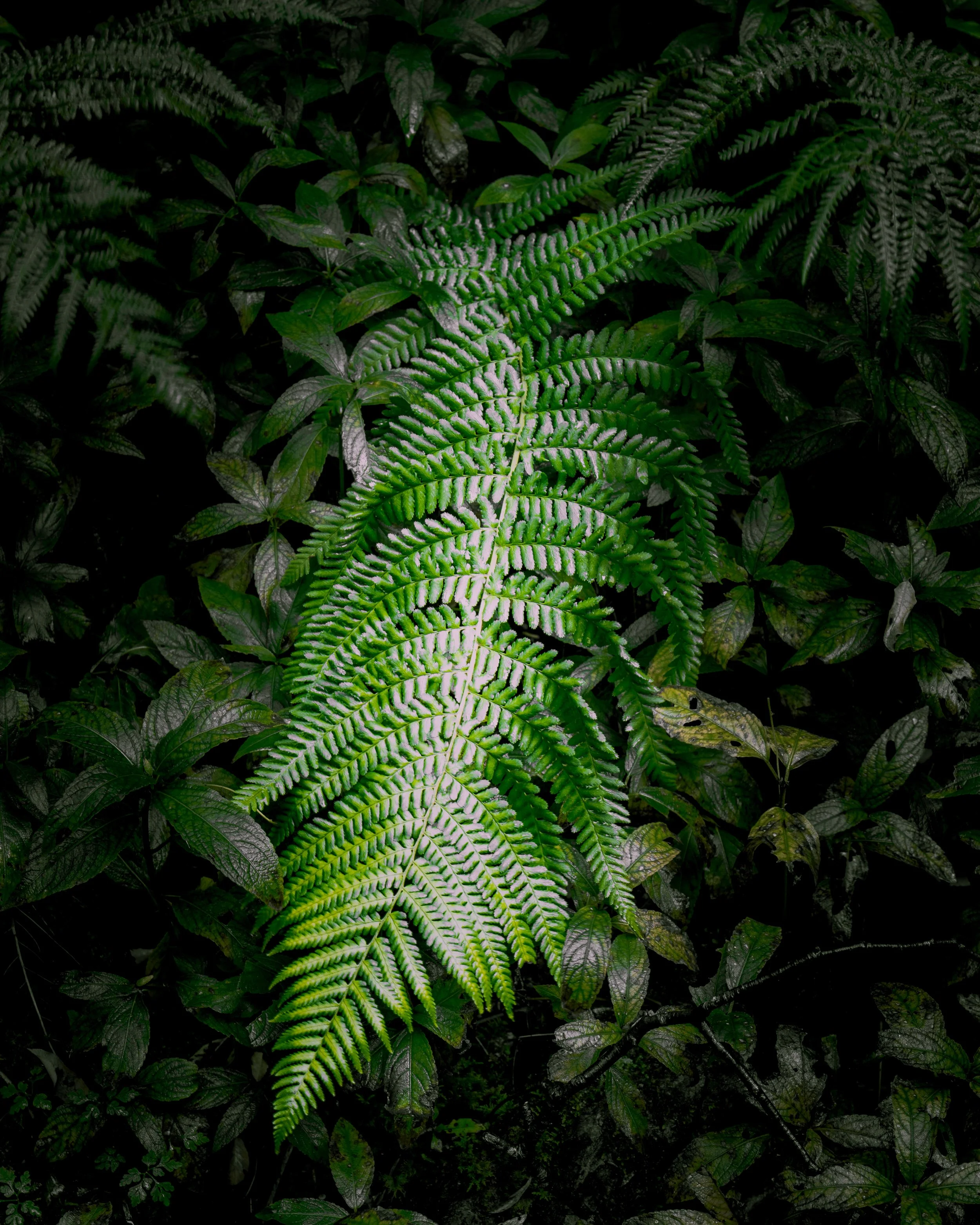
Choose Carefully
You could choose nature, or trees or in the case of this project, leaves.
Find something you think you will enjoy and that you have a good chance of completing!
And when you think about it, it makes sense; he was practising the skills he would be teaching and using the materials and tools that his protégés would be using. It made even more sense to me as a music teacher – I played in bands, conducted ensembles and worked on my own stuff as well, using the tools and instruments I would be using to instruct my students. I hadn’t thought of it like this before. To a musician, practising, rehearsing with others and leading groups are things we just do, much the same as language teachers converse in tongues that aren’t their own, drama teachers take part in am-dram, maths teachers solve problems and geography teachers spend time exploring the outdoors. We’re trained to do these things, we’re passionate about them and we enjoy them.
Without a project, your thought process could be, “Nice mountain, nice light – click.” With a project, it becomes, “Now I am looking for isolation/red objects/trees/destruction/insert subject here.” What is in front of you hasn’t changed, but you and your thought processes have.
So why, as photographers, do we not always have a project on the go?
This, for me at least, is a really interesting question, and since I moved to the Lake District, I haven’t had a landscape project. I will by the end of the year, but more of that later.
When I lived in London and first started taking photos, I was taking photos of anything and everything. I was photographing as much of London as I could, in different styles and at different focal lengths, at different times of the day (and night), capturing as much of it as I could. I was learning to photograph and, at the same time, learning everything I could about my new camera. At this point, London was my project.
As I got better and my understanding of the medium deepened, I started to look for different things. I wanted collections of images – different light trails, bus trails, buildings, different styles of architecture, people, the Underground… You name it, I probably did it, or thought about it and never got round to it. As I got to know the city better, my relationship with it and the people in it shifted – I, perhaps almost paradoxically, became less exploratory.
Beginner photographers photograph curiosity, but as we become more experienced, some of that curiosity wanes and we start to think about what makes a good image. Having a project brings some of that curiosity back.
The same has been true of my time so far in the Lake District, but I haven’t yet made it to the project stage. It is something I have been blissfully unaware of until I started writing this blog. Actually, that’s not entirely true; I do have something on the go, but it’s a huge piece of work that I’m not talking about just yet and won’t be completed for a longtime.
I have been trapped in photographing the Lake District as a whole – big landscapes, dramatic skies over big landscapes, viewpoints, rivers and lakes. You get the picture.
What I haven’t done is decide on a project and gone out to do it.
We don’t always have something on the go because either we don’t think we need to, we don’t want to, or we simply haven’t considered it. But undertaking a project can be a really powerful thing in terms of your own creativity and your development as a photographer.
A project changes photography from waiting for something worth photographing into actively looking for photographs.
OK, but What Can My Project Be About?
This is an excellent question, and one which deserves an answer. The honest one is the one that sounds almost sarcastic: “Anything.”
Your project can be anything you want it to be. It doesn’t need to be weird or groundbreaking; it doesn’t even need to be original. It just needs to exist.
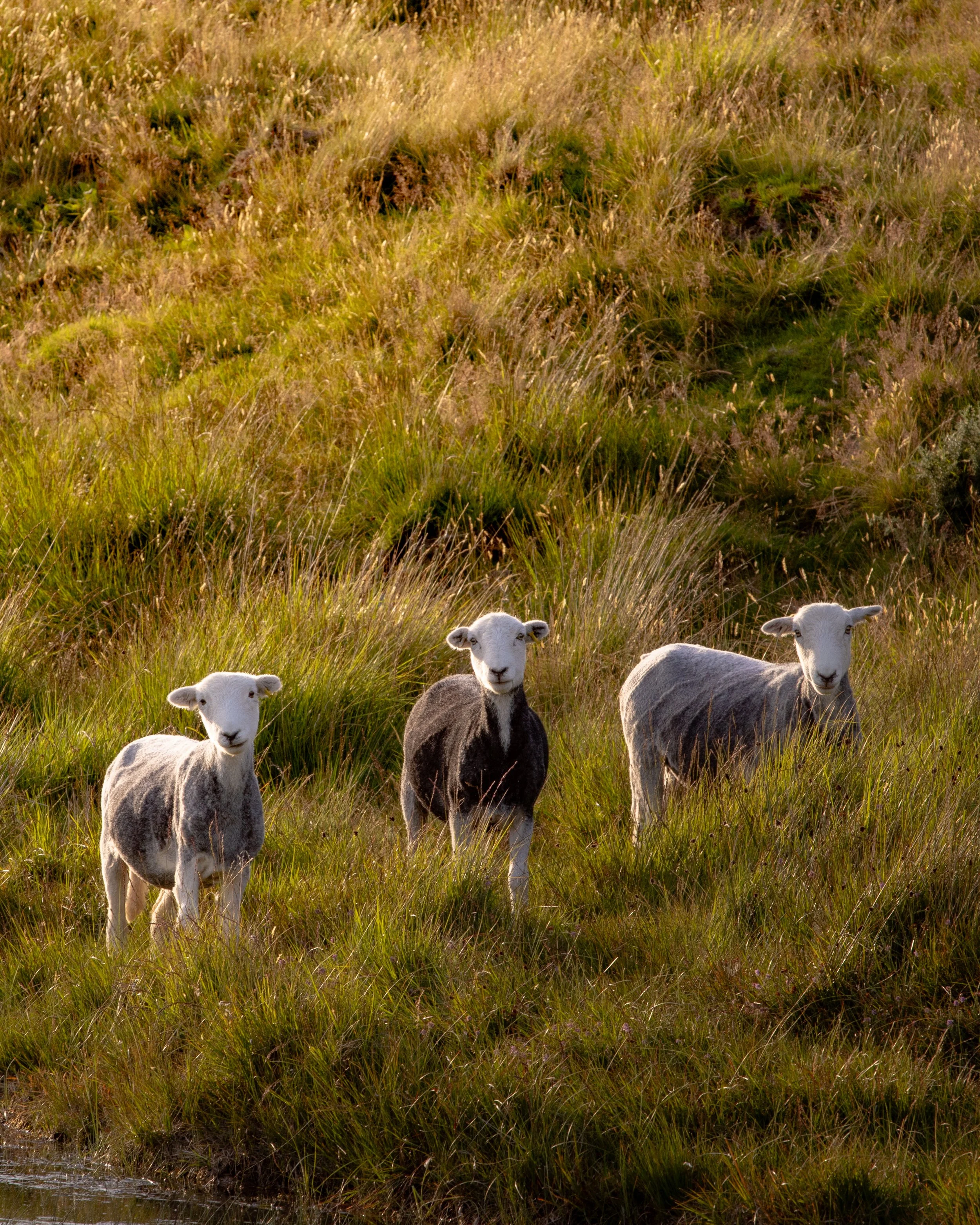
Interpretation
This image wasn’t part of a project, but could fit into “Sheep”, “Herdwick” or “Groups of Three”, you can be as specific of as broad as you want to be - it’s your project.
It could be something that you are passionate about, or focus on a photographic technique that you want to develop – two puns in one sentence!
You could go really niche, or you could go really broad. It could be “leaves” or “lone trees”. You could go with something that isn't subject-focused and consider “peace”, “harmony” or “solitude” (I told you they didn’t have to be original).
But once you have your project idea, if you want to, of course, you could then start to narrow it down: “Leaves of the Lake District”, “Solitude in the City”, “Lone Trees in National Parks”.
If we took the example of “trees”, we’ve got the whole tree, the bark, the buds, the leaves, the roots… all of these would be great projects in their own right. You’ve got to start big and then narrow it down. Some people decide to focus on a specific colour. The world is your oyster with this; you just need to start.
How Do I Choose a Theme?
This is the hard part, and you might need to brainstorm some ideas over the course of an evening. Some people will find this much easier than others; if you’re not one of them, that’s OK!
We’re now right at the end of autumn, which means that once the sun is down at 4pm, we have some long evenings to think about these things – unless you’re one of the astro gang who is relishing the dark nights.
Start with something big. It doesn’t even have to be outside. Think broad, think colours, think of things you see a lot of or something which interests you. You could consider something like family or home – this would give you something good to focus on when the days are short and the sunsets are early.
I always think with this that it’s a good idea for your first project to go with something fairly broad. This will give you a sense of whether you even like shooting a project or not. Aim to have ten pictures that you are proud of. Evaluate the process, learn from it and start thinking of your next theme. Perhaps make your next theme something slightly narrower. Rinse and repeat.
But if you’re here, you’re probably a landscape photographer, and the thought of staying home to do something doesn’t appeal to you – we’re trying to develop our landscape skills after all, right?
I do think that winter is a great time to have a project as a landscape photographer – the sunsets are early, the sunrises are late and there is always the temptation to wait for the early morning/evening light and colour to fade, pack up our stuff and go home. But what if you stayed out for another 30 minutes to work on your project, or another hour or two?
If you’re really struggling to get started, then there are a plethora of ways to help you come up with an idea. You could use Google, you could use an AI bot to try and get ideas that are slightly more off the wall but tailored to you, or you could try using the ideas generator that I built for the website you’re on right now!
How Does a Project Make You a Better Photographer?
As beginner photographers, we have to learn to “see”; we develop that photographic ‘eye’ that people speak of. We can end up in a position where our photos start to become repetitive or feel as though we are going through the motions. Once you hit this, or you feel like you’re in a rut, the project really comes into its own and you learn to see again, but in a different way!
The repetition that the project brings teaches you to see patterns and notice variation, and you will start to see visual consistency across your images. Oh, and it will make you go out when conditions aren’t, in the traditional sense, perfect.
Ever been in a car and thought, “Wow, do you know, I can’t remember the last time I saw a bright yellow van”? And then, all of a sudden, you’re noticing them everywhere. Welcome to how the human brain messes with itself! But take on a project on, say, postboxes, and you’re noticing postboxes in places where you didn’t even know they existed.
Projects also help with our visual storytelling. You can take one great image and it works well on its own, but when you need to have the ‘keepers’, you’re starting to think about details like variety, visual rhythm, repetition, sequencing and what needs to be left out of the collection.
You’ll find yourself wanting to go out when the conditions aren’t perfect – it might not be golden hour, but how good would that postbox you’ve been meaning to go and capture look when the clouds are gathering like they are now?
Know When It’s Finished
When you are in the planning phase, set goals or targets, whichever you prefer. Decide how many images you want for your project and stick to it. What you don’t want is a project that turns into nigh on a thousand images sitting on a drive somewhere that you might get round to sorting out one day. What we’re doing is almost building two things at once – we’re building a project and an archive.
Our project has boundaries; it might be ten images, three months, one location, a single season or just one roll of film. The archive we build is the sum total of all of the photos we will ever take, and contained within that will be our project.
Look through the images often. Decide which ones you like, which ones help with your story and which ones ultimately aren’t going to make the cut. Do remember this, though – it’s not done when you’ve got ten images. It’s done when you have curated those images into a cohesive body of work that you’re proud of. You should be evaluating your images as individuals and as part of the whole; you might even find that your ‘best’ image doesn’t have a place in the final ten.
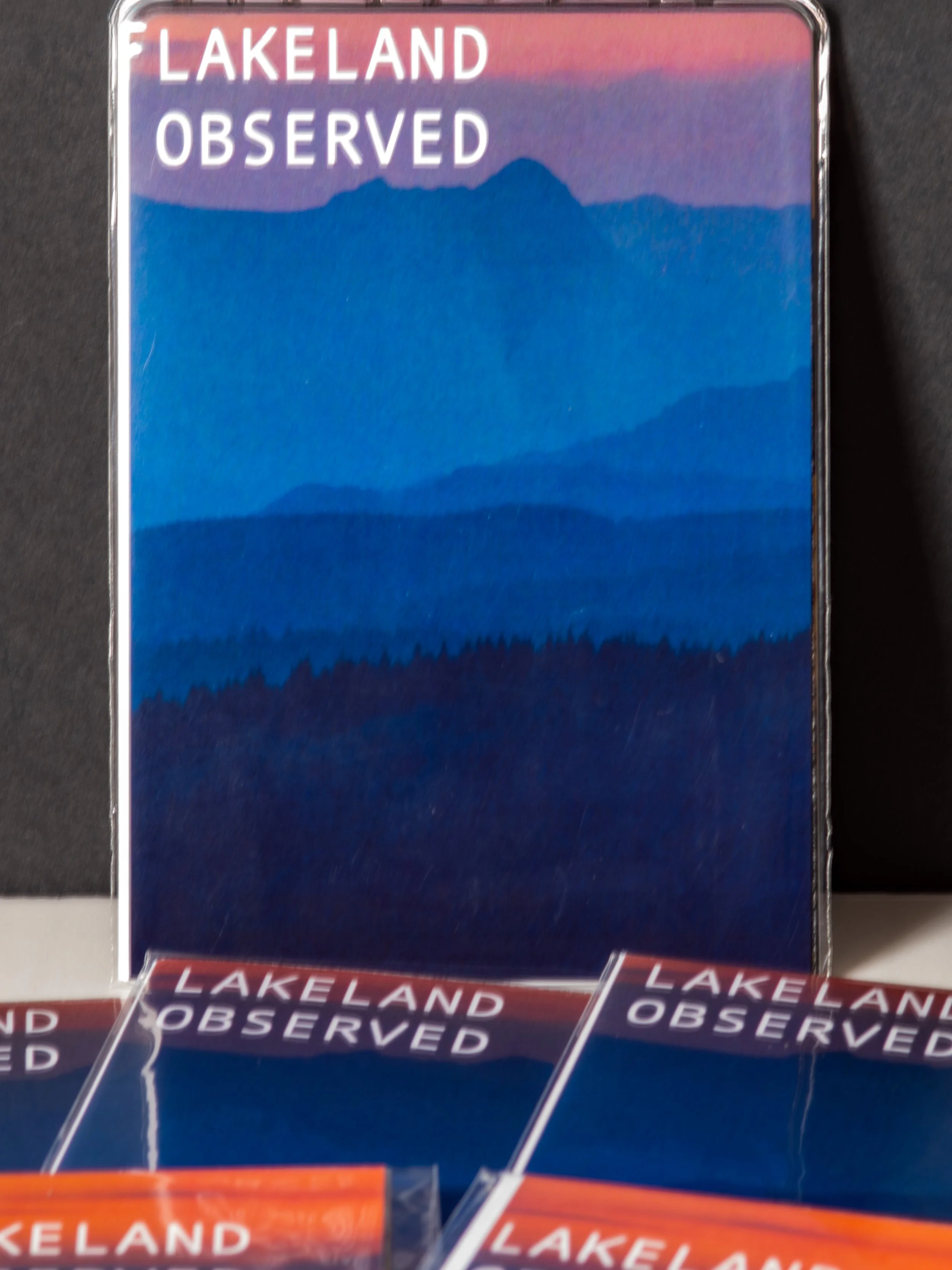
Make a Zine
One of my current favourite things to do with my finished images, it’s great to have something tangible that you have planned, shot and made; they’re great for sharing and marketing too!
Choosing Your Images
Collections and star ratings in Lightroom are great for this, and I wish I was better at deleting photos – something that I might have to get better at if storage prices don’t come down.I will admit that I have hundreds of photos of my hand in front of the lens, between the camera and the landscape, helping me to see the starts and ends of panoramas or focus stacks! (Hey, that might make a good project!)Your first project doesn’t need to be your life’s work; ten photos is enough.Choose them, print them and have them on a page in front of you. Decide what works, what needs to stay, what needs to be replaced and then reprint it. Check the order. Does it work? Yes? Boom. Nailed it.
Some of My Favourite Projects by Other Photographers
Some of these are books, but for me, a book represents a collection of work, usually on a theme, and that represents a project – sure, a book is in and of itself a project!
Martin Parr – The Last Resort
Teco De Luccia – Poorly Hidden Behind Things
George Steinmetz – Foodscapes
Robert Frank – The Americans
Ernst Haas – New York in Colour
Thomas Duke – Stepping Through Film
Taylor Jones – Dear Photograph
I am purposefully not telling you why I like these projects or what they are about. I want you to go and find out for yourself without being clouded by someone else's opinion.I will, however, tell you a bit about Poorly Hidden Behind Things by Teco De Luccia. This is because there is very little information about it online. Only 50 copies were made, and what I have seen of it has been included in YouTube videos I have watched.
In this collection, De Luccia created a series of self-portraits. As the title suggests, he was behind things in each image and was not very well hidden. Some images show him hidden better than others, but all you need to do to find him is follow the cable from his shutter release, and there he is. It’s a bit like a rubbish game of Where’s Wally? and I think it’s a really fun, humorous project.I hope that these serve as a good jumping-off point for you!
So What Now?
Given one of my current obsessions, the first thought that springs to mind is to make a zine. This is great fun and, for me, makes the project feel finished. I have written a blog about making zines if this is something that interests you. It’s lovely having something tangible that you can share at the end of a project like this.The obvious thing to do with your photography project (which I am deliberately putting second) is to post your results on social media with an interesting caption. Don’t worry about the like count, don’t worry about the engagement; post it because you’re proud of it and want other people to have the chance to share in what you have done.OK, so you’re done?Start another one. That’s the really exciting question, isn’t it? What’s next?
What About My Project?
Full disclosure – I am not practising what I preach. I don’t currently have a landscape project on the go, but by the end of the year, I am going to have something picked out that I will share with you and turn into a series on this blog. Let me know your thoughts in the comments if you have any ideas for me!When I have chosen something, I will share it here and, I think more importantly, I will share the whole process with you rather than just the finished photographs.
Final Thought
A photography project doesn’t need to be complicated, groundbreaking or particularly clever. It just needs to give you a reason to keep looking, keep shooting and keep thinking about the photographs you are making.That, for me, is where the real value lies. A project changes photography from waiting for something interesting to happen into actively searching for photographs. It encourages you to revisit subjects, work in conditions you might otherwise ignore, experiment with different approaches and start thinking about how individual images work together rather than simply chasing standalone favourites.Perhaps most importantly, it gives you something to finish.So choose something. Keep it manageable, aim for ten photographs you are genuinely happy with and see what happens. Print them, make a little book, put them online or simply keep them together as a finished collection. Then start another one.
I’ll be doing exactly the same.
Thanks for reading! If you enjoyed this one and want more photography tips, thoughts, guides and the occasional ramble like this, you can sign up to my newsletter. I send out new posts, useful resources and other bits that I think photographers might actually find helpful — no spam, no nonsense.
If you'd like to help keep the blog going, you can also buy me a coffee. It helps cover the cost of running the site, testing gear, getting out to make new work and generally gives me an excuse to keep disappearing down photography-related rabbit holes. Completely optional, but always hugely appreciated.
If you have enjoyed this then check out some of my earlier blogs by clicking the links below:
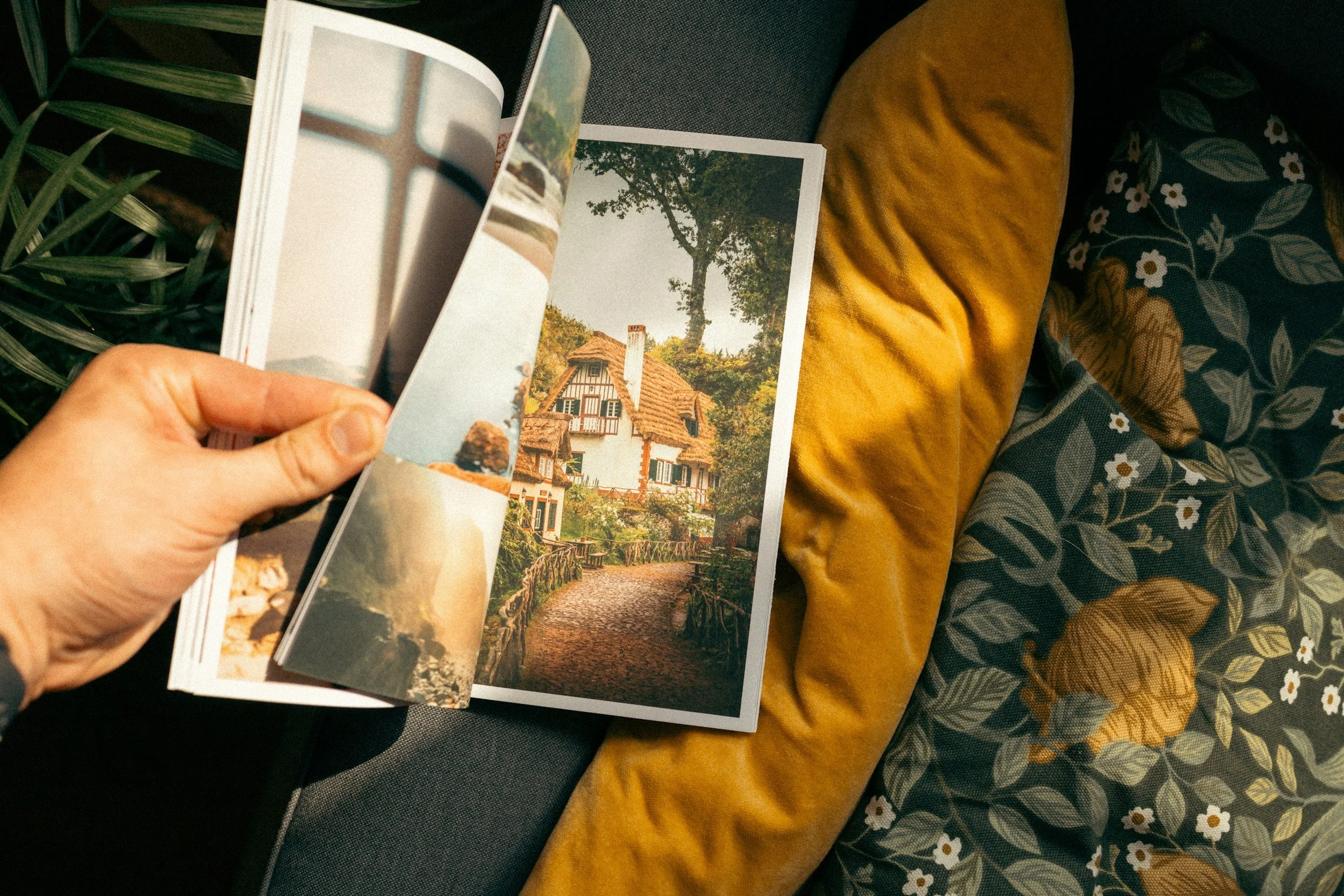

Image Credits: Main Blog Header: Javier Allegue Barros | @soymeraki on Unsplash