““There is nothing worse than a sharp picture of a fuzzy concept” ”
But what’s it a photograph of? This is a question I ask myself all the time. Usually with a bit of extra emphasis on the ‘of’. I think that the above quote from Ansel Adams, the (in my opinion) undisputed Godfather of landscape photography, is a really useful ‘tool’ for us as photographers. Grab a brew because this is a long one!
TL;DR
Technical skill helps you make a photograph, but it doesn’t decide what the photograph is about.
What’s in a photograph, and what the photograph is of aren’t necessarily the same thing.
Your subject might be light, scale, isolation, repetition, atmosphere or a relationship between elements — not simply the object in front of the camera.
Strong composition helps make that intention clear by removing distractions and creating a visual hierarchy that guides the viewer through the image.
Complicated photographs can work brilliantly, provided the elements work together rather than compete for attention.
Before pressing the shutter, ask yourself: “What is this photograph actually of?” If you can answer that clearly, the other decisions — lens, position, framing, exposure and timing — become much easier.
But what could Ansel Adams mean?
What he’s saying to us here is that technical mastery won’t save an image. Being good at using your camera setup and being a ‘technically sound’ photographer does not substitute for emotion, clear purpose, or of course, story. You’re far more likely to evoke emotion in someone with a meaningful image of something that isn’t quite sharp than you are with a photograph of ‘nothing’.
Technical skills make the photograph but they don’t decide what it is about.
How you achieve this (or even ‘if’ you need to), is going to be largely dependent on the type of photography you’re doing. As a landscape photographer I am trying to convey drama, beauty, an impending sense of something about to happen. I might make you feel happy or sad, I might show the passage of time through a long exposure or a series of images… you get the idea. I might tell a story by showing destruction, erosion, the impact of nature. I could go on.
Street photography is often reliant on the photographers ability to tell a story, spot patterns/repetition or notice the unusual. Landscape photography has many parallels but we’re looking for different things.
There are however, some genres which don’t always rely on story or emotion to be successful and are largely reliant on technical excellence rather than the ability to translate something that it doesn’t need. These are often factual genres and are the types of images where having straight lines and accurate perspectives are far more important than allowing the subject to tell a story. I’m thinking of things like architectural photography, pack shots, real estate photography and, to some extent, product photography, though with product photography, on reflection, this is probably more often the exception than it is the rule.
That’s not to say that any of these of the genres are any less valuable or less creative than the others, it’s just that they often require a different skill set and, I think, are more intentionally deliberate and take place in environments where, more often than not, there is a lot of control over just about everything you can think of.
I think that some context is in order here, because I don’t want to alienate anyone and I certainly don’t want people thinking I am some kind of photography snob, it couldn’t be further from the truth - I take landscape photos and commercial photos, I also used to shoot a lot of buildings when I lived in London, I’m on everyone’s side but trying to make a point.
With commercial photography, I would break this down into three distinctions - let’s use a toaster as an example as I think it’s something we can all relate to. The pack shot shows us ‘oh this is a nice looking toaster’ the context shot shows us “oh, it looks great in the kitchen, I’d like to own that’, the final one shows what it does “oh wow, that toaster would look great on my worktop, and look at the amazing toast it produces. I’m hungry now.”. These are three images with very different outcomes, each requiring very different and complex skillsets eliciting emotion and are essentially three photos of the same thing with completely different outcomes.
Architectural photography not only shows us a building, a part of it or its inside, but it might also show scale, scope, geometry, repetition, light, texture, human interaction with space, etc. To use the same system as above “That’s house, I like how it looks”, then we get “look how the architect has used line and shape and texture” and then perhaps “Oh, I love this and could really move in here… send enquiry to estate agent.”.

Light
Save for the differences I have outlined above, the one thing that the ALL have in common is light. All photography is largely dependent on two things - the availability of light and the quality of that same light. Sometimes, there isn’t enough light, and in those circumstance we either create our own or we utilise our cameras and our skills to use more of the light when there isn’t enough (tripod anyone?) or we shape it through whatever means we can.
As landscape photographers, we can appreciate the huge difference that ‘good;’ or dramatic light can have on our images.
A ‘throwaway’ scene in the Lake District (not that there are any, but stick with me), can be transformed into something epic, just by the sun breaking through the clouds and picking out a particular area of the landscape. These moments are incredible to experience and almost inevitably are far too fleeting and are over before they have even begun - you have to be on your game and ready to shoot to capture it.
This obviously requires some quite specific weather conditions, and knowing how to read the Lake District weather is going to be an important skill to have if you’re desperate to catch conditions like this. You can use some of these apps to help you to plan your shoot.
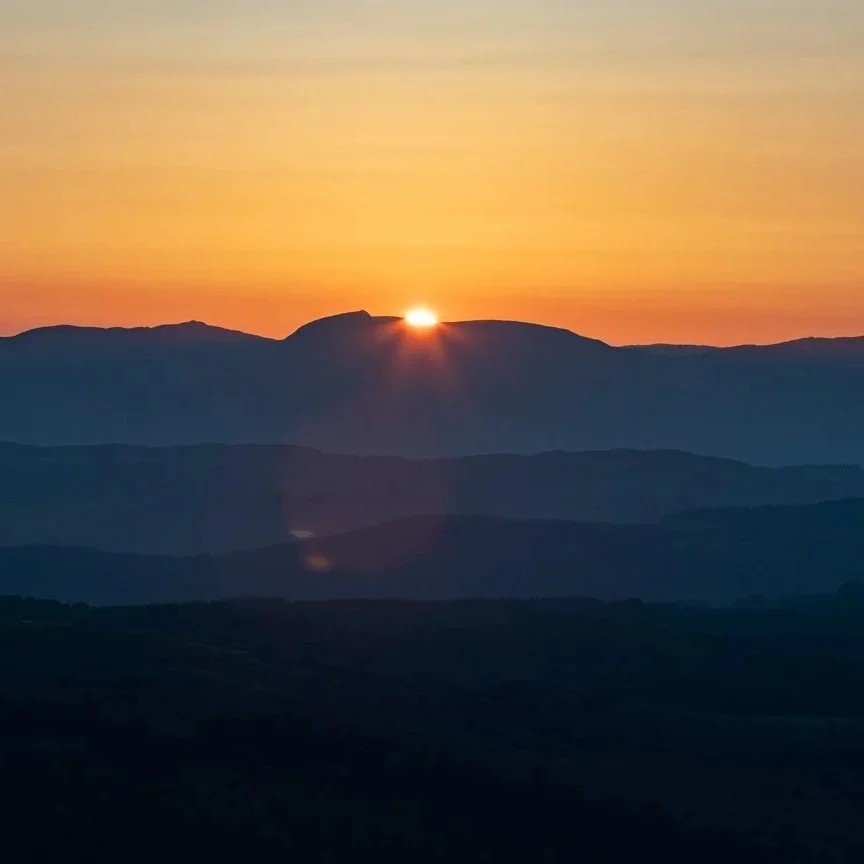
In these circumstances, the answer to “What’s it a photograph of?"“ is going to be “the light”. Light makes a great subject, especially if you’ve got some great scenery to back it up!
Oh and don’t get hung up on Golden Hour and Blue Hour. They are not the be all and end all of everything, James Popsys is living proof of the fact that you can be a landscape photographer and not have to take all (if any!) of your photographs during these periods of the day.

Composition
Composition isn't just about arranging things nicely. It's about deciding what the photograph is about and removing things that compete with that idea.
Composition is everything. But so is light. Combine both and you could be on to seriously tasty images. There are many rules about composition - think about the golden ratio, leading lines and the rule of thirds - but also remember that rules are made to be broken. That being said, there are some compositional conventions that will really improve your image - people are used to seeing images presented in a certain way and if yours doesn’t do that, then they are likely to find that it throws them off and are less likely to enjoy what you are putting in front of them.
I would also add a caveat to the last point I have made above though; unless you are shooting a commission or to a brief from a client then you should be photographing what you want to and should be doing it for you, not for other people.
It is often said of composition that what you leave out of your image, is just as important, if not more important than what you leave in.
I am a big advocate of telephoto lenses in landscape photography; it gives us compression that brings the scene ‘closer’ to us and helps us to create layers.
But I think my favourite use for a telephoto is to pick out different bits of a landscape - I love scanning the landscape for interesting things to photograph. It’s not always a good idea to shoot as wide as you can just to shove as much into your photo as possible; this can make your images feel busy and confusing for someone to look at.
We live in an age where attention spans are getting shorter and often, people just aren’t going to spend time trying to decipher an image which has many ‘moving parts’, they much prefer something where they can see a clear subject and move on. They probably won’t ever see your photo again and will carry on looking at videos of cats, or people falling off things.
In light of the previous paragraph, I think it would be remiss of us not to remember that most people are now viewing photography on a device of some sort, be that a mobile, a tablet, or a computer screen. Often they will be scrolling idly through social media and before they’ve had chance to look at your image, they’ve scrolled past because their brain has immediately filed it in the “too hard to do tray”. This isn’t about chasing likes, comments, shares, etc. the point I am making is that if you’re sharing your images then you want to people to at least spend a moment looking at them!
I don’t mean that complicated images can’t be successful, far from it. But we then move into thinking about visual hierarchy and how our eyes can lead us through an image. If you have a strong subject then people are more likely to spend time looking, but that doesn’t mean everything else needs to be stripped away. The other elements in the frame can help guide the viewer towards the subject, encourage them to explore the image and, ideally, give them a reason to stay there for a little longer. The important thing is that those elements are working together rather than competing for attention.
There are people who will spend longer looking and I am absolutely not saying that simple image = good image “because Instagram”. We’re not just shooting for Instagram (not that they show photos to people these days).
What I am saying, or at least trying to in a very roundabout way, is that if your image has a clear subject, good light and a strong composition then people are more likely to spend time looking at it. If you look at your image and think you would need to explain to someone what it’s an image of, then you need to rethink and recompose.
Subject Versus Object
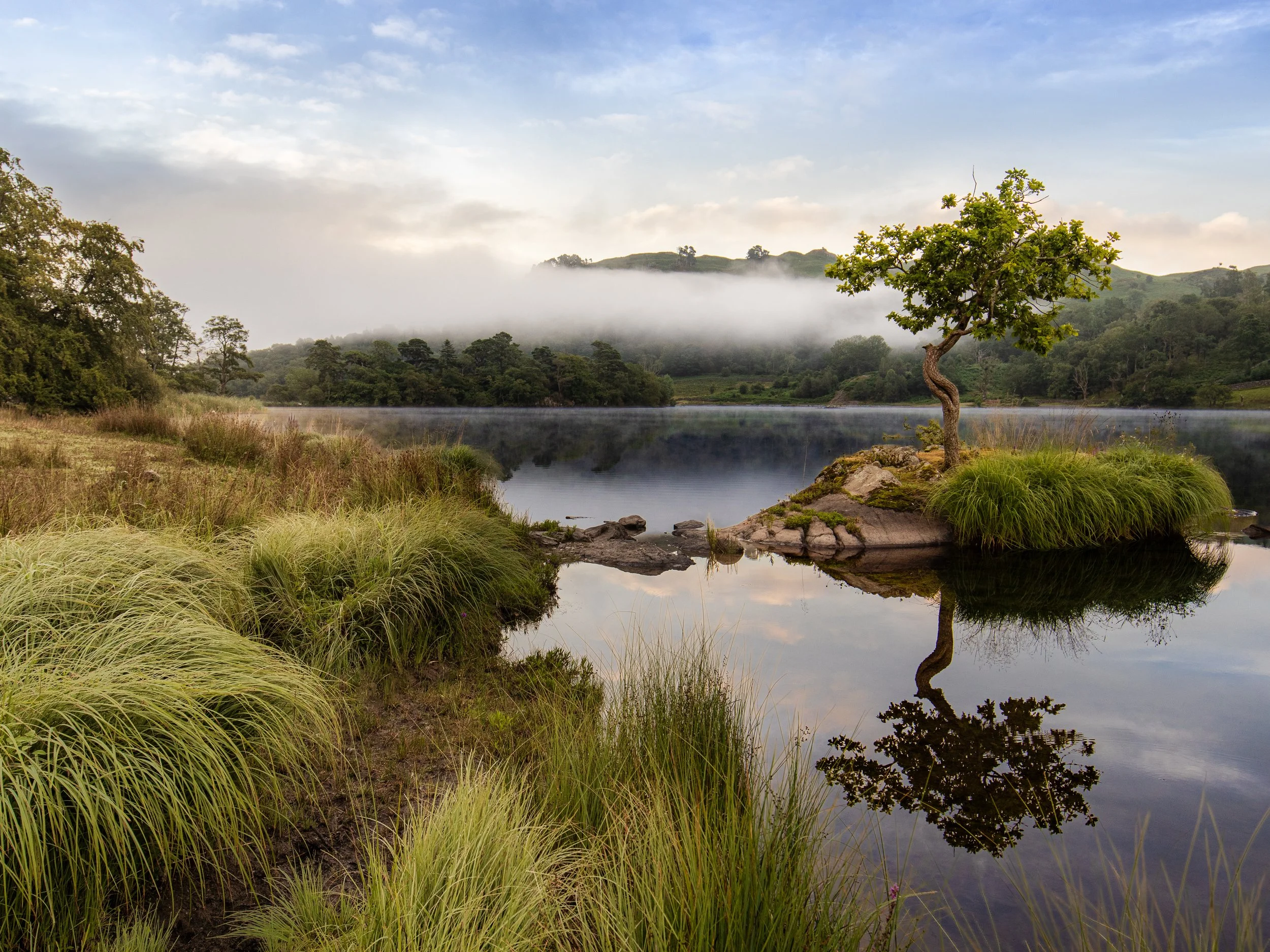
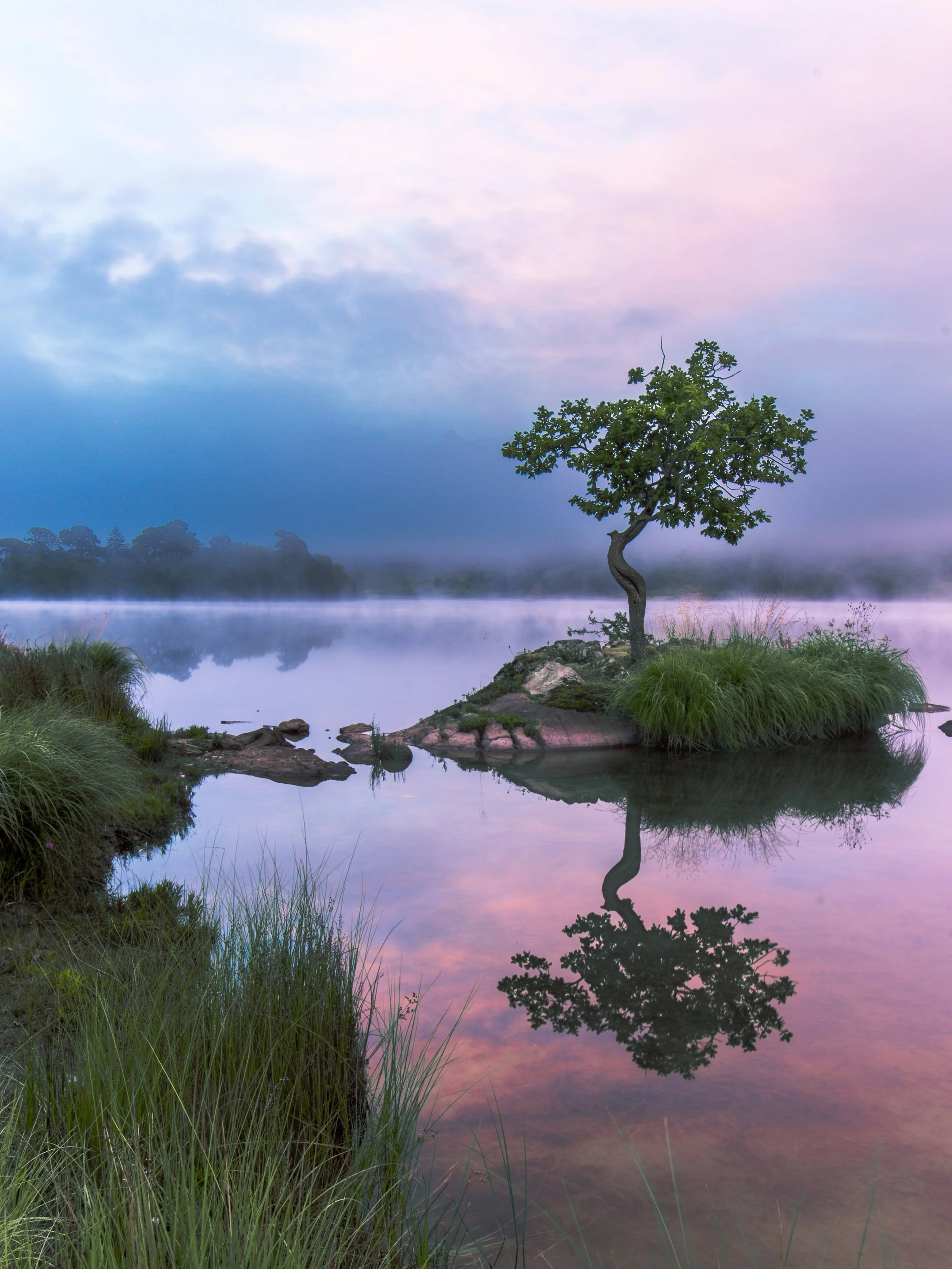
I think that a lot of the time, not all, there is a distinction that can be made here. If we take the example of a lone tree (I’ve just been to shoot the one at Rydal Water so expect a lot of lone tree examples for a while!), we could argue that the object in the image is the tree, but the subject could be isolation, scale, shape, light, tranquility etc.
This all depends on our individual perception, the way we shoot and the way we edit. We know that all of the photographers have seen the tree, that’s an absolute, but they will all read the scene, compose and expose slightly differently. But remember, just because you see it like that, it doesn’t mean that the person looking at your image will.
We often hear art critics/experts saying “but what I really think they are trying to say is…”. Art is subjective, photography is art, ergo photography is subjective.
“What's in the photograph?” and “What's the photograph of?” are not necessarily the same question.
Imagine you’re stood in front of a scene and ask yourself “What can I see?”. If the answer is “well there’s a tree, some rocks, some mountains, a farmhouse”… you get the idea, then you might not have found the image yet.
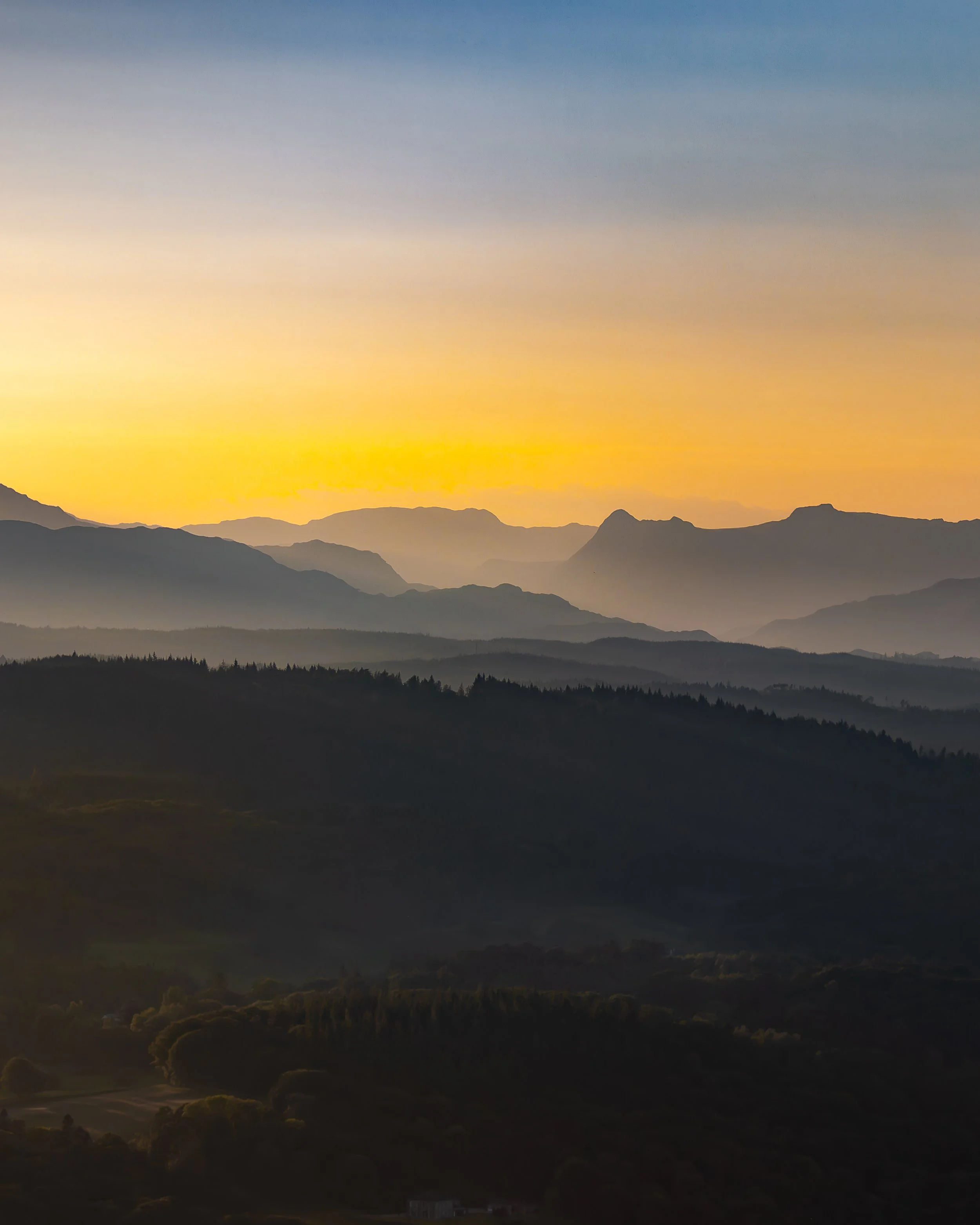
If the answer is more like “the shaft of light hitting through farmhouse”, or “the leading line created by the rocks which leads to the tree” or “the separation of the layers between the hills” then this means that you’re on to something and now have to start asking more questions.
These might be questions like “Do I need to move?”, “which lens will work best for this image?”, “should I include or exclude this foreground?”, “what is the light doing?”, “should I shoot vertically?”; the list could go on forever.
This is when you take your time (if the light allows!), compose and then start to click the shutter. Before you press the shutter, ask yourself “What is this photograph of?”. Not what's in it — what it's actually of.
In Conclusion
None of this means that every photograph needs to tell some profound story or have a deep meaning behind it. Sometimes you just see something that looks brilliant and want to photograph it — and there’s absolutely nothing wrong with that. But I do think there’s value in working out what it was that made you stop and reach for the camera in the first place.
Was it the light? The shape? The scale? The relationship between two things? The atmosphere? The moment? Once you know the answer, you can start making deliberate decisions about how you photograph it. Where you stand, which lens you use, what you include, what you leave out and even when you press the shutter can all help make that idea clearer.
Technical ability matters. Composition matters. Light matters. But ultimately they’re all tools that help us communicate what we saw in the first place.
So, before you press the shutter, ask yourself: What is the photograph of? Not what’s in it — what is it actually of?
Thanks for reading! If you enjoyed this one and want more photography tips, thoughts, guides and the occasional ramble like this, you can sign up to my newsletter. I send out new posts, useful resources and other bits that I think photographers might actually find helpful — no spam, no nonsense.
If you’d like to help keep the blog going, you can also buy me a coffee. It helps cover the cost of running the site, testing gear, getting out to make new work and generally gives me an excuse to keep disappearing down photography-related rabbit holes. Completely optional, but always hugely appreciated.
Check out some of my other blog posts by clicking the links below: