My Photography Blog

Welcome to the Chris Kendrick Photography Blog, where I share the stories, challenges and inspirations behind shooting Lake District landscapes and working as a Cumbria-based photographer. Alongside behind-the-scenes reflections from the fells and lakes, you'll also find honest photography gear reviews, covering the cameras, lenses and accessories that genuinely perform in real Lake District conditions. Whether you’re passionate about landscape photography, exploring Cumbria’s scenery, building your kit, or simply curious about the craft, there’s something here for you.

Some posts include affiliate links; thank you if you choose to support the blog through a qualifying purchase. If there’s a topic or piece of gear you’d like me to cover, let me know. Enjoy exploring!

Enjoy!
photography gear review Chris Kendrick photography gear review Chris Kendrick

Gear Review: Logitech MX Creative Creative Console - Keypad and Control Dial

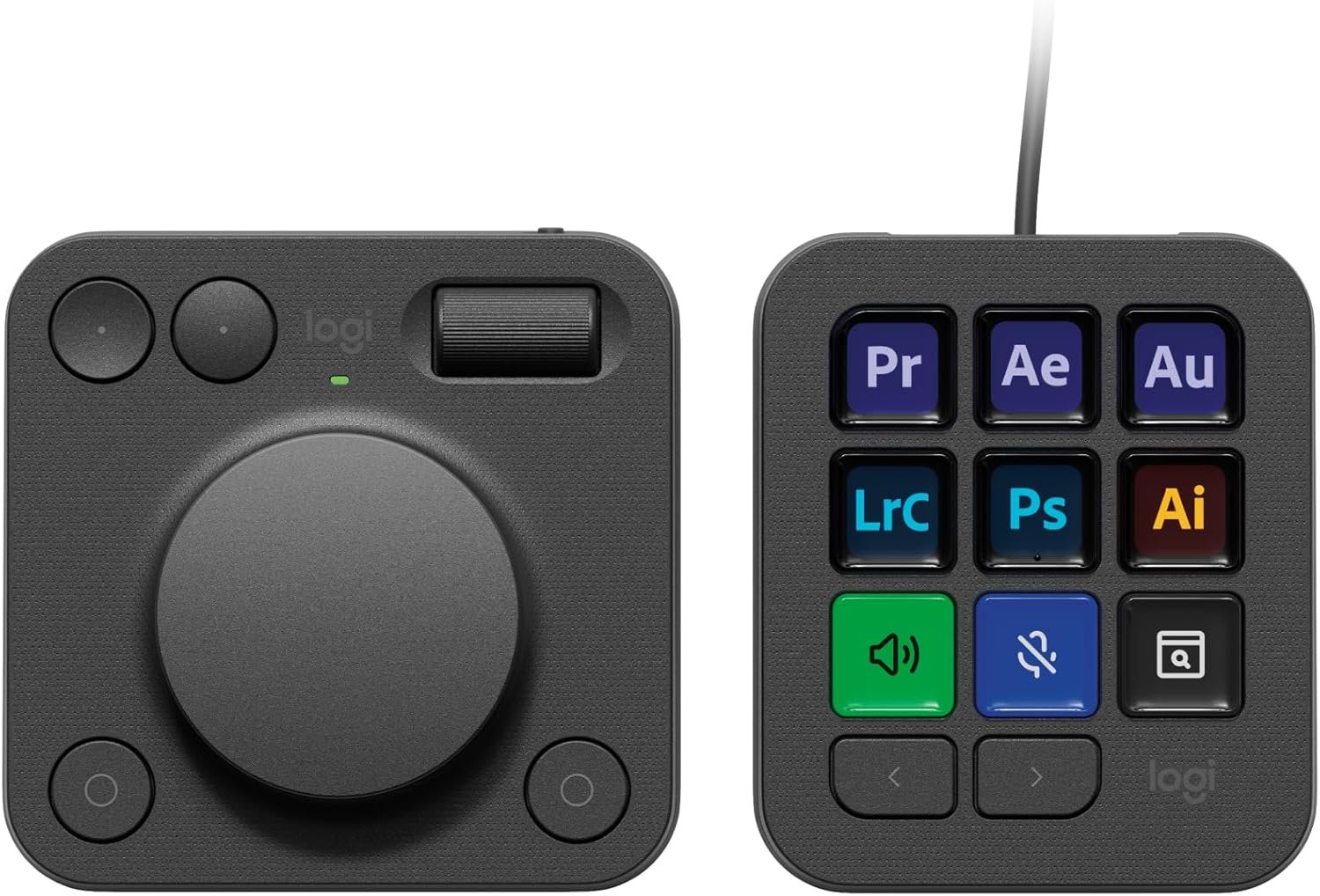
The Logitech MX Creative Console is quickly becoming one of the most talked-about tools for photographers and content creators looking to speed up their workflow. Combining a programmable keypad with a precision control dial, it offers a more tactile, intuitive way to edit photos and videos compared to traditional keyboard shortcuts. With growing support for apps like Adobe Lightroom, Photoshop, DaVinci Resolve, and Figma, it’s designed to streamline repetitive tasks and improve efficiency across creative workflows.

But is it actually worth adding to your setup in 2026? In this review, we break down its key features, real-world performance, and how it compares to alternatives like the Stream Deck—so you can decide if it’s the right tool for your editing workflow.
In this Logitech MX Creative Console review, I take a hands-on look at whether this highly customisable control surface can genuinely speed up editing and streamline creative workflows and consider if this is a worthwhile upgrade for photographers and content creators.

This blog contains Amazon affiliate links - if you click one of these links and then make a qualifying purchase, I may receive a small kick back and this really helps to support the blog and the best of it is that it doesn’t cost you a single penny extra!

You can check current pricing here if you’re interested.

TL;DR

The Logitech MX Creative Console is a thoughtfully designed, highly customisable control surface that genuinely speeds up creative workflows making it an excellent investment for photographers, designers, and content creators looking to work smarter, not harder

Why Choose the Logitech MX Creative Console?

I am someone who likes to do his research because I like to get things right the first time, especially when I am spending money (or birthday vouchers!). There is a lot of hype around other macro-key products, particularly the Tour Box Elite and the longer standing Elgato Stream deck.

Alternatives to the MX Creative Console

I quickly ruled out the Stream Deck as it doesn’t have a scrub wheel and to buy something to compliment it means spending more money and another decision to find something that works and that I like.

The Tour Box was a serious consideration for me, the reviews are good, it looks smart and it works well with DaVinci reosolve, and it’s that last part that made the decision for me. Everyone online is telling me how good it is to edit in DaVinci using this, but I don’t edit enough video, let alone in DaVinci to make this worthwhile.

The MX Creative console however, works across most of the Adobe Creative Suite (it’s really strong in Photoshop and Lightroom) and is context aware so the buttons change depending on the software that you have open. It can even control aspects of your main operating system, which I find really handy.

First Impressions and Build Quality

What’s in The Box?

In the box, you get your keypad, your dialpad, a USB cable (because the keypad doesn’t connect via bluetooth, so I would like to see that improved in the future, though it does mean that there is no latency) and a stand which props up the keypad so that it rests at a good angle for you to work with. The underside of both of these components has some material stuck to it in order to create some friction to stop it sliding all over your desk. Mine are both placed on a large desk pad so I’m not too concerned about this, but I have tried it on a bare surface and it seems to hold up well.

Build Quality , Design & aesthetics

Straight out of the box you will notice that this thing is light, but that isn’t reflected in the quality of the materials, which feel solid enough and like they will be able to stand up to being sat on my desk for the next few years. That said, if I do want to take them anywhere with me, I would probably buy a case to transport them in. The wheel is made of metal and feels good under than hand.

A quick word on the unboxing, just because people like to know about that kind of thing: It was a solid 5 out of 10 in terms of excitement, it’s certainly not the experience you get from something like an Apple product. I will however point out that there is nothing in the packaging that can’t be recycled, so a full 10/10 on that front.

When it’s plugged in, the control buttons are bright and pretty vibrant - they look great on the desk. The buttons are soft and feel pretty satisfying to press, and that’s always nice.

You’ll also notice that there is a lot of similarity with the now discontinued Loupedeck line of products and suspect that this is no accident given that Logitech acquired Loupedeck in 2023 and sales from this brand were discontinued in March ‘25.

The console comes in two colours, graphite and pale grey. I have opted for the graphite for two reasons: Firstly, I have the MX Keys S, which are also a dark grey/graphite colour, as well as the MX Mouse 4 which is the same colour so aesthetically, it looks good and all ties together (not quite with my blue Mac, but that’s another story). Secondly, in my experience, light grey and white things that you are constantly touching often ended up looking quite grubby and I want them to carry looking good for longer.

Connection and Set-Up

The initial set-up is really easy and the LogiOptions+ software that comes with it is really intuitive and actually quite enjoyable to use.

The setup process is completely guided and you’ll need to grant a couple of permissions (I’m using a Mac so if you’re on a Windows machine then your experience here may differ slightly). The ‘easy to set up Logitech MX Creative Console’ would be a good (if slightly unimaginative) sales line for them.

Logi Options+ software setup

The software does a good job of detecting what you have installed on your computer and then you just need to select which ones you want to have shortcuts installed for. Each piece of software comes with some pre installed shortcuts/actions to get you started and this means that you pretty much can straight into playing with it.

Page one of your keypad is the system actions page, and this comes preloaded with things like volume controls, open Finder and music controls, and honestly, it’s really good.

I have added some more actions to the next available page to do things like cmd+tab and to close windows quickly. I have also added some buttons to open the apps that I use the most, so that’s all of my photo and video apps as well as things like Word and Mail. The other thing that I have done is to set up some buttons to open websites that I use frequently, like Google, Amazon, YouTube and of course, Squarespace!

We also need to talk about the contextual awareness of the whole system. It’s awesome. It’s quick and it’s intuitive. As soon as I switch from one app to the next, the pages have changed and my buttons are ready to go. Each of the Adobe apps has its own set of pre-installed shortcuts. Logitech have done a great job of picking the ones that they know we will need in each of the apps, I haven’t had to change much, but I do know that I can add anything I find isn’t there really quickly through the LogiOptions+ app.

The dialpad (or as I keep calling it, the wheel), is just as easy to set up. It’s far less visual than the keypad, and that’s ok. I think the two off set each other really well and having too much visual output on the dialpad would be information overload for a lot of people.

The main jog wheel feels really good under your fingers and moves smoothly, though I think one improvement I would like to see in future updates of the hardware is for it to have some kind of haptic feedback, it moves very smoothly, but that extra feedback would really complete the experience.

The same is true of the vertical scroll wheel, it feels good and works well but it would be much better with some feedback through the fingers. There are also four buttons on here, all of them fully customisable within each of the apps that you want you to set it up for.

Real World Usage: Editing Workflow Performance

I don’t think it would be going too far for me to say that this has been game changer for me. I have made some small changes to layouts, just to put the buttons that I use the most often in the right places for me, and I have added things that I use that weren’t programmed-in out of the box and I think I have got it just where I want it.

For example, editing a landscape image in Lightroom is now much quicker because I have my tools on my desk in front of me, I can use the dialpad to increase and decrease the value of sliders and I can bring tools and masks up really quickly with the touch of a button, rather than having to use several clicks.

I’m not just using it for anything photography related, but I am doing a lot of the day to stuff on my Mac from this, everything for launching websites to closing windows.

The MX Creative Console has sped up my workflow across all of the apps that I use, but the changes it has made for me in my creative apps are massive. I am much quicker and, dare I say it, better organised as a result of this; not just on my computer, but also I am more minded to keep my desk much clearer!

The contextual changes you will see are instant. For example, when I click to open Lightroom, the contextual awareness picks this up straight away and switches my keypad to the Lightroom icons. Pressing the buttons is instant as well, there’s no lag and the tool I have selected is ready to use. I think that this is partly down to the fact it is plugged into my computer, that being said, I haven’t had any noticeable lag with the dialpad, which is connected via Bluetooth.

The one thing I have noticed, other than what I have already mentioned is that the large wheel on the dialpad is touch sensitive, which is nice, but if you inadvertently catch this with your hand as you move around your desk then you can end up changing things that you didn’t want or need to.

How I use it in my own workflow

I have been thinking about how to speak about this, because it’s had a big impact on the way I am working and I only expect this to get bigger as I use it more.

But what has it actually done for me? It’s removed the need to memorise and recall shortcuts, and some the things I do regularly I am now building muscle memory for. I need a brush in Photoshop? I have a button for that now. Want to put in a radial or linear gradient? I have a button for that too. I can’t make my mind up if this is making me quicker or lazier. Perhaps both.

It has relieved the need for some of the longer shortcuts that I would use, which is nice, so now instead of cmd+shift+r for reseting an image, I have just one button to press. It also means that I am using my graphics pab slightly differently - the buttons I have on there are now largely redundant.

My graphics tablet’s buttons have always been a bit of a bit of a bugbear of mine, they are largely just in the way and I didn’t really use them. Having the MX Creative Console means that I no longer have to guess what I set these buttons up to do, because I can see the shortcuts in front of me. If you’re looking for a graphics tablet and the MX console isn’t for you then, then I’d recommend something like the Xencelabs Combo Medium.

Who Should Buy One?

  • Photographers (Lightroom/Photoshop users)

  • Designers (Photoshop/Illustrator)

  • Video editors (Premiere Pro/DaVinci users)

  • Productivity-focused users

This is going to appeal to a lot of people, especially those who want to streamline their work flow. Those of you who are willing to spend the time customising it so that it wors the way that you work will get the most of it - one of the biggest plusses for this is its customisability.

It works equally well across Lightroom, Photoshop and Premiere Pro. I have used it with some success in Davinci, but I don’t know this software well enough to give anything meaningful here other than ‘it works’ and it does the basic stuff I need it to.

If you’re looking to speed up your editing workflow and reduce reliance on keyboard shortcuts, this is one of the most effective upgrades you can make.

Pros and Cons

Pros

  • Fully customisable means that it will be suited to all workflows.

  • Adpative/Context aware so keys change with your workflow and you don’t need to adjust.

  • The tactile dial gives you some real precision control

  • Two-part modular design means you can find the ideal placement for you on your desk.

  • Is being regularly updated with more support

  • The Logi Options+ software is intuitive and make set-up much easier.

  • Not ‘laggy’ with the inputs and responsiveness

Cons

  • Wired connectivity for the keypad means another cable trailing across your desk and another USB port used up.

  • Setup and customisation can take a while, but worth it if you want to get the most out of it.

  • If you already fly around the shortcuts, this might not be much of a benefit.

  • Nine keys isn’t as many as some of the competitors, so you spend time moving through the pages.

  • It’s quite lightweight so doesn’t feel as premium in the hand as some of its other competitors.

  • Jog wheel could be improve by adding a notch/groove for a finger to sit in.

My Tips for Getting the Most out the MX Creative Console

  • Spend time setting it up in the way that you want.

  • Put the shortcuts you use or will need the most on the first couple of pages to save scrolling.

  • Think about your desk placement and get it somewhere comfortable.

Should You Buy It?

In a word, yes. Especially if you fit into one the categories I have mentioned above. This is a truly great piece of kit and I am constantly finding new ways do things with it, its made me much more productive and let’s be honest, who doesn’t love a button?

Where to buy the MX Creative Console.

The MX Creative Console is currently available on Amazon, I paid £175.04 on 2nd April 2026.

You can also buy straight from Logitech, who at the time of writing have some good deals avaialable so it’s worth a look there too.

Other retailers are available but if I try to list them all here it’s going to be a big list!

At around £175, it’s not cheap—but for something that you’ll use every single day, it’s an investment that quickly pays for itself in time saved.

Final Thoughts

This is great piece of kit that I have only owned for a week or so and it is already becoming an integral part of my workflow, which I am not sure what I would have been doing without. Paired with the MX Key S and MX Mouse it’s really helped my productivity. The mapping is great and means that you can really make each of these things your own, and make them work how you want them to work and think that this is one of the MX Console’s strengths.

Specs

Controls

  • 9 LCD keys with dynamic app-aware icons
  • Precision dial for fine adjustments
  • Custom layouts for workflow optimisation
  • Multi-page controls for extended functionality

Software

  • Logi Options+ control platform
  • Smart Actions (multi-step automation)
  • Auto-switching profiles per application
  • Plugin ecosystem for creative apps

Connectivity

  • Bluetooth Low Energy
  • USB-C charging and connection
  • Up to 10m wireless range
  • Rechargeable battery (dial module)

Compatibility

  • Windows 10+ and macOS 12+
  • Adobe Creative Cloud
  • DaVinci Resolve & Final Cut Pro
  • Affinity Suite and Figma

All details correct as of 02/04/2026, tested using Apple Mac M1.

Read More
gear review, photography gear review, godox Chris Kendrick gear review, photography gear review, godox Chris Kendrick

Gear Review: Godox X3 Pro Wireless Touchscreen TTL Flash Trigger.

The Godox X3 Pro is a compact, touchscreen flash trigger designed for Canon photographers who want fast, reliable control over off-camera lighting. In this review, I take a practical look at how the X3 Pro performs in real-world shooting, covering its radio triggering reliability, touchscreen workflow, TTL and High-Speed Sync support, and how it fits into a modern Godox lighting setup. If you’re considering upgrading your flash trigger or moving to a cleaner, more portable lighting workflow, this Godox X3 Pro review breaks down who it’s for, how it performs, and whether it’s worth adding to your kit.

Ahhh, flash triggers! For years (for me at least) these have been unnecessarily difficult to use bits of kit with complicated menus, too many buttons and some of the least intuitive things I have ever had in my photography set-up.

The Godox X3 Pro-C was launched in late 2025, with initial availability starting in September/October 2025 and changed that! It is something that I have been wishing someone would make for a number of years and finally something has come along that ticked a lot of the boxes I was hoping for.

I’ve had a number of different flashes and I still own some of them. One of the first sets was some Neewer off-camera flashes (the catchily titled Neewer NW-562 E-TTL Flash Speedlite), which came with their own triggers and a manual which contained some literal translations which were largely unhelpful. They were a lot of faffing, but once I got some settings dialled in for the transmitter and the receivers, I didn’t change them. I could just about work with the plethora of buttons and dials on the flash to change things like the output power and the zoom, and I did find it handy being able to reposition them. I still have them as they make useful lights that I can hide in scenes to light them more creatively.

I eventually upgraded to some more powerful strobes, this time from Godox and went for the Godox SK400III, which I paired with Godox XPRO-C TTL trigger. This was a real step-up from the previous trigger as now I could set up groups and store some different settings. Again however, I found this really complicated to use. The old style LCD screen was, I found, very confusing, difficult to use and to be quite honest, a bit of a pain. It did however give me some more flexibility and allowed me to do a little bit more. When I say ‘allowed’, what I mean is that I could control the strobes from the trigger rather than having to go and off fiddle with two set of buttons on two different flashes.

More recently, I have taken delivery of the Godox X3 Pro C Wireless Touchscreen TTL Flash Trigger. Yep, you guessed it, I got in the Black Friday sale last year, and I have had a couple of months to play with it before giving you my thoughts. One of my overriding thoughts is that they need to come up with some better names for these things!

This blog contains Amazon affiliate links and I may receive a small kick back if you make a qualifying purchase after you have clicked one of these links. This is a great way to support the blog, so a massive thank you goes to you if you choose to make a purchase, all of the money I make from this goes back into helping me to create reviews for the blog, it’t not a huge amount, but every little helps!

First Impressions:

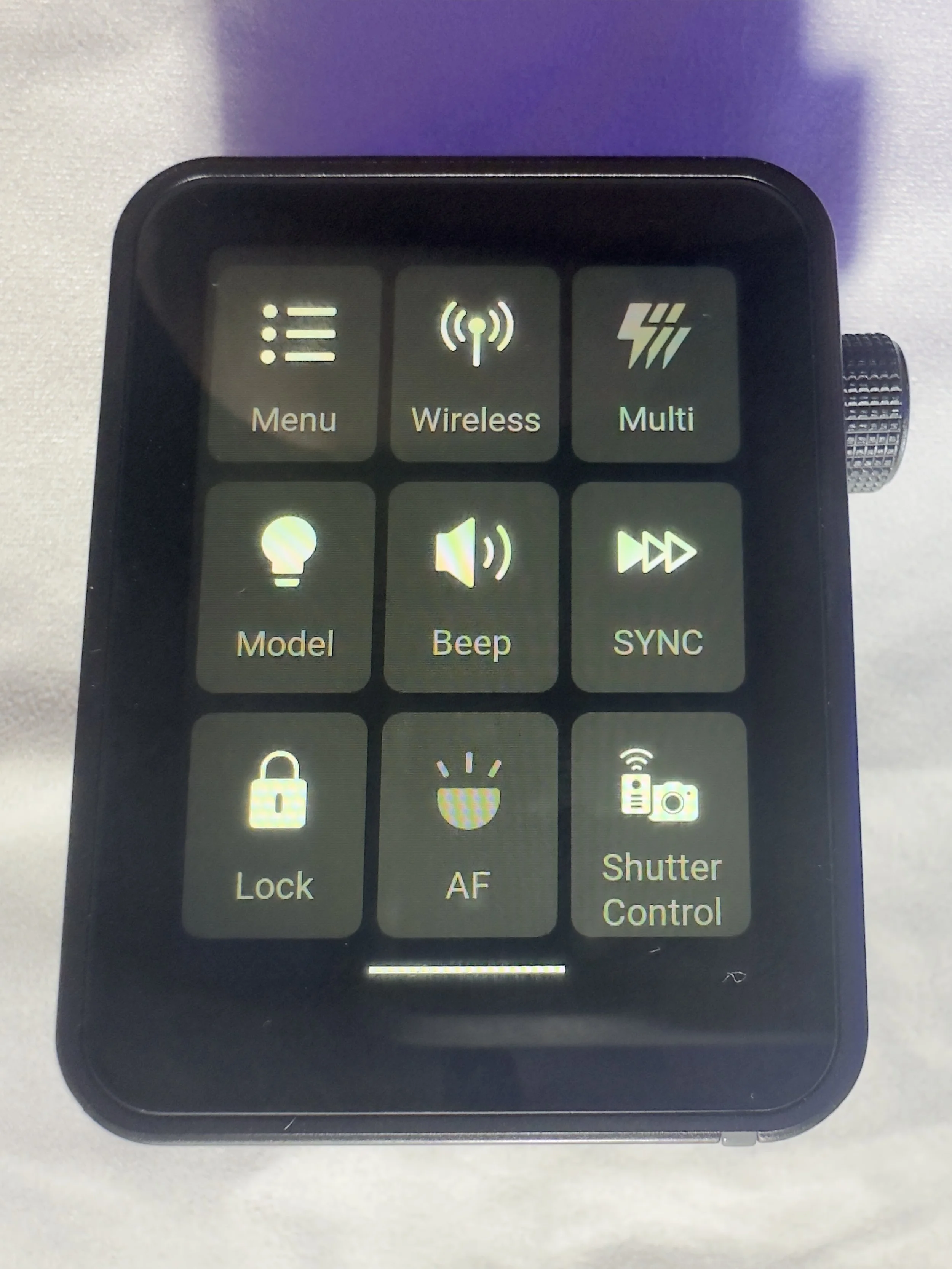
This is much smaller than previous triggers that I have owned, yet you don’t lose any of the screen real estate that you want with a piece of gear like this. It’s light, which is a real bonus when you’re sticking it on the top of your camera via the hot shoe. One of the other things I like about it is that it has a built in rechargeable batter - HOORAY - no more faffing about with AA batteries which cost a fortune or rechargeable ones that never seem to last very long. The battery is rechargeable via a USB C cable which comes supplied.

It’s a lovely little object to hold, the plastics feel solid and the branding is fairly tame which means it looks quite subtle.

The touchscreen is bright and responsive. It’s also big enough that you’re not forever bumping icons you didn’t mean to and it’s not so sensitive that you’re accidentally changing your settings by just brushing against it.

There are 2 buttons on the right hand side, which give solid feedback when your press them (one of these will test fire the flash and the other is the power/menu button). Finally, on the same side, you have a multifunction wheel, which you can turn to navigate the menus and press to make selections, it has a reassuring click which lets you know you’ve made a selection. This might be handy if you’re working somewhere cold and are wearing gloves, or if you struggle to use your hands to make the changes via the touchscreen.

On the front of the unit there is an autofocus assist beam and at the bottom of it there is mechanical button which retracts a pin on the hot shoe to enable you to release it from the camera when you’re ready to pack down.

It came with about 60% charge already in the battery and to charge it to full took about 45 minutes. I don’t know what the full battery life is, but it’s been enough to get me through a full day’s shooting.

My Experience with The Trigger

I have really enjoyed using it so far. Once I had everything set up (which took no more than a few minutes after I had watched some YouTube videos), I was ready to go and shooting. I had someone booked in for some headshots not long after I took delivery of it and it got me through the whole session with no issues (I did have the old one on standby just incase I ran into any issues), I was able to make range of adjustments which synced to the strobes with no issue.

One thing I really like is that you can scan the 2.4ghz frequencies and the trigger will tell you which channels are the clearest ones for use in the environment you are, and then you can set this on the strobes and the trigger. I use each of my flashes in its own group and I don’t bother with the ID numbers as I am not often working in an environment which requires me to do this. I have however, messed around with creating different groups and using ID numbers for the purpose of this review, and have found that it’s a fairly straightforward process.

There is a slight lag from when you make changes on the trigger to them registering on the flash, whilst this hasn't been an issue for me, it’s something worth knowing. We're talking about delay of less than a second, but I know there are people who aren’t going to be into this.

What other features does it have?

One little ‘'bonus’ feature of this unit is that you can also use it as an intervalometer, but you will need to connect the trigger to the camera with 2.5mm TRS cable (male to male). These are less than a tenner for two if you click the link I have just posted, but a lot of you might find that you already have one of these knocking around at home somewhere, especially if you have purchased flash gear before.

One of the big plusses, for me at least, of this trigger is that it is a radio trigger so this does away with the need for line of sight to enable you to trigger the flash, which gives you some more flexibility on set/location and it saves the need for the use of optical slaves.

Switching between TTL and manual flash is straightforward, which is especially useful when working in changing light conditions.

The updatable firmware is also a huge bonus for lighting setups and products which are constantly evolving, and will reduce the need to keep spending money on buying new gear.

You can also change the trigger distance or range and you have two options here, 0-30 metres and 100m. I have found that when I am shooting in the studio, it’s much more reliable and has fewer misfires when working in the 0-30m setting. I haven’t used it outside yet, so can’t say if it works well up to 100m.

Finally, in the menus there is a function called ‘legacy’ which allows you to turn off all but one of the pins on the hotshot (the centre one), which means that it has greater functionality across a range of older camera bodies. You should be sure to check that your camera is compatible with the unit before you buy it.

Who is this for?

The Godox X3 Pro-C is ideal for photographers who want a compact, modern flash trigger without sacrificing control or reliability. It’s particularly well suited to Canon shooters who regularly work with off-camera flash and want a streamlined, clutter-free setup that travels easily. If you shoot on location, work with multiple light groups, or frequently switch between TTL and manual flash modes, the X3 Pro-C’s touchscreen interface and intuitive layout make lighting adjustments quick and efficient.

It’s also a strong choice for photographers moving away from optical triggering and into a radio-based workflow, offering dependable performance indoors and outdoors without line-of-sight limitations. Those who value portability, a clean camera setup, and fast access to lighting controls will appreciate what the X3 Pro-C offers.

However, photographers who prefer physical dials and buttons, work extensively in cold or wet conditions, or want interchangeable batteries may find a more traditional trigger a better fit.

Where Can I Buy One?

The easiest place to get one of these is on Amazon, where you will find it for around about £88. Make sure that you buy one which is compatible with your camera. There are a number of different versions, so don’t end up with something that you need to return! The ‘C’ in the name of this one stands for Canon, there is an ‘S’ for Sony and so on. They are clearly labelled with the camera brand on Amazon.

Pros and Cons

Pros

  • Bright touchscreen with intuitive navigation and operation.

  • Small profile makes it great for travelling and on location marking.

  • Supports Canon TTL metering and high speed sync

  • Uses the Godox X system which gives compatibility across a wide range of flashes/strobes

  • Built in USB C rechargeable battery negates the need for a high pile of AA batteries.

  • High speed sync speed up to 1/8000 if your camera supports it.

Cons

  • Touchscreen can be fiddly in cold and wet conditions

  • Not hot shoe pass through. Once it’s attached, there is no way to connect anything else, which could be a limiting factor in some setups.

  • More expensive than some other Godox triggers without much development around the core functionality.

Final Thoughts

The Godox X3 Pro-C is a strong choice for Canon photographers who want a modern, streamlined approach to off-camera flash control. It delivers reliable radio triggering, a clean and intuitive touchscreen interface, and a compact design that keeps camera setups lightweight and uncluttered. In real-world use, it offers all the core functionality most photographers need, from multi-group control and TTL support to High-Speed Sync for working in bright or fast-changing light.

While those who prefer physical buttons or interchangeable batteries may gravitate towards more traditional triggers, the X3 Pro-C excels in ease of use, portability and workflow efficiency. For photographers looking to simplify their lighting setup without compromising on control or performance, the Godox X3 Pro-C is a capable and well-designed trigger that fits comfortably into both studio and on-location workflows.

Technical Specifcations

Godox X3 Pro-C (Canon) – Specifications

Quick reference spec sheet

Compatibility
Canon EOS (E-TTL / E-TTL II)
Wireless system
Godox X 2.4GHz radio
Range
Up to approx. 100 m
Channels
32
Wireless ID
01–99
Groups
A–E + ALL
Flash modes
TTL, Manual, Multi
High-Speed Sync
Up to 1/8000s
Flash compensation
±3 EV (1/3-stop steps)
Sync modes
Front & rear curtain
Interface
Colour touchscreen
Power
Built-in rechargeable battery
Charging
USB-C
Firmware updates
Via USB-C
Mount
Canon hot shoe (quick-lock)
Remote control
Power & zoom control on compatible flashes
Size
Approx. 72 × 51 × 38 mm
Weight
Approx. 48 g