Be Lake District Kind - How Photographers Can Do Their Bit
This is one of the most important messages I have written on here for a while, and I am doing so to support the work of the Lake District National Park Authority to promote the message of being Lake District Kind and the campaign that they are currently running.
I’m going to be doing this through the lens of (yes I went there) a Lake District Landscape photographer to encourage you all to continue being Lake District Kind and to promote this message with anyone who you know is going to be visiting.
I know that for the most part, I am going to be preaching to the choir as so many of us do the right thing and do it consistently, but if you’re visiting for the first time, or need to be reminded then I hope that this article is useful.
Photography in The Lake District
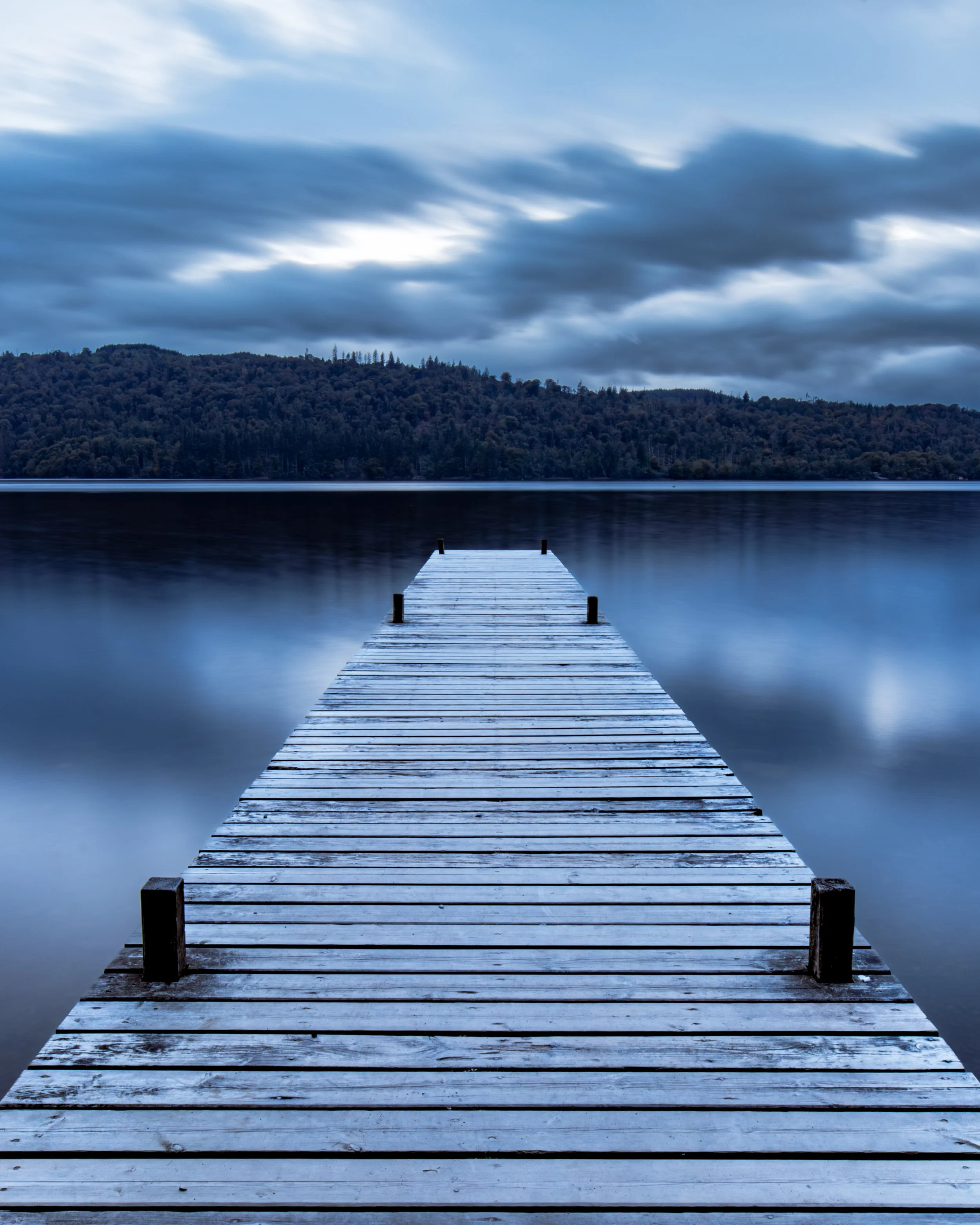
We all know that the Lake District National Park is a photographer’s playground, it has been for many, many years and we need to keep it this way. There is nothing more frustrating than arriving at a location and having to move rubbish that has been left by someone else, or finding that your foreground has been spoiled with patches of scorched earth left behind by irresponsible and prohibited fires.
Many of us like to camp in the fells so that we can be sure of that sunrise shot or cloud inversion and later on, I will explore the dos and don’ts of camping in The Lake District and will look at some of the advice about parking up camper vans as well.
There’s a lot to cover, but alongside the Be Lake District Kind Message, we all also need to remember the importance of Leave No Trace!
Many of us will have no choice to arrive by car and we’ll take a look at how and where to park in here too… let’s jump in.
Wild Camping
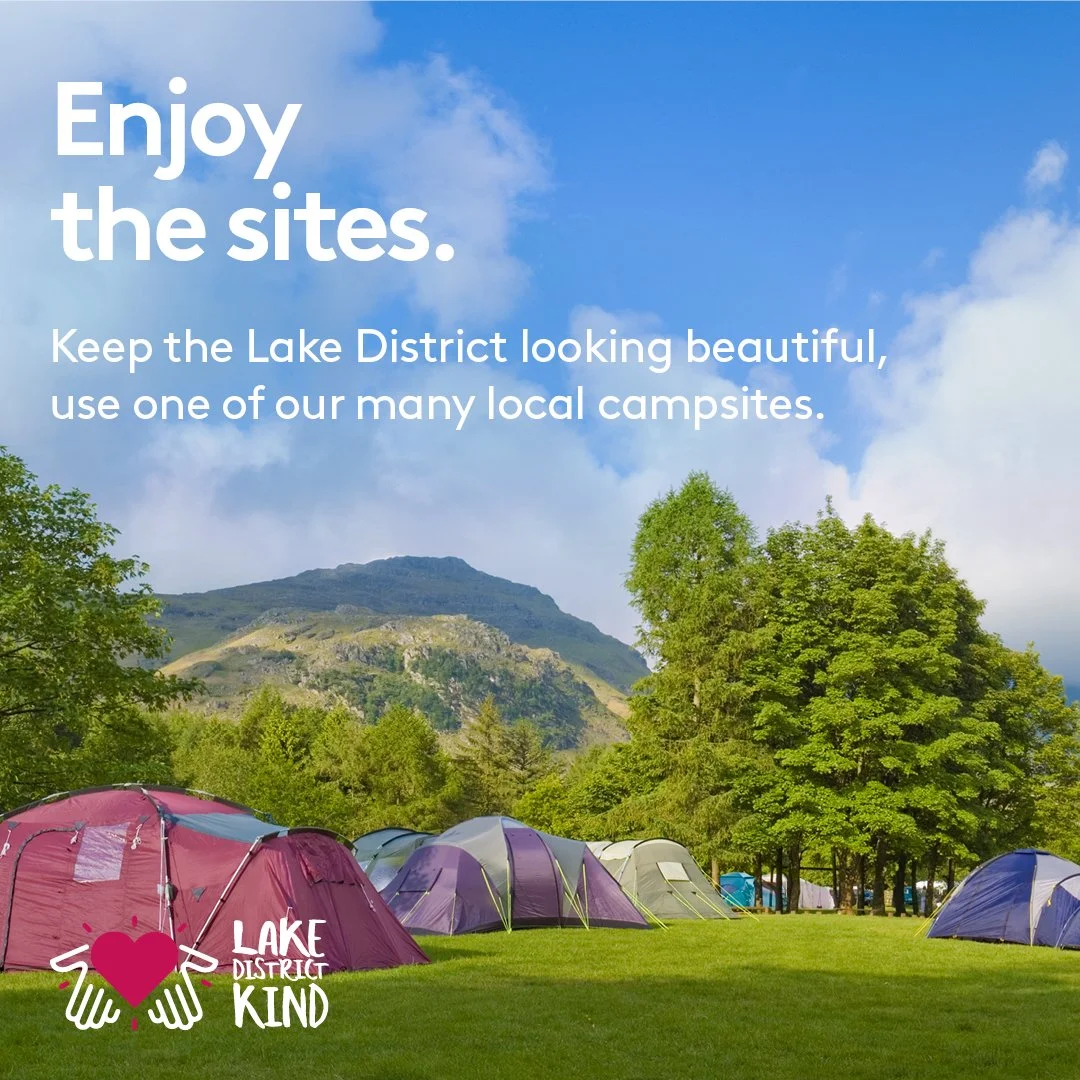
This can be one of the best ways to secure your spot for that incredible sunrise shot or cloud inversion you have been longing for, without having to set an alarm for silly o,clock in the morning to hike up a fell. Wild camping in the Lake District is, technically, not permitted. It is however, normally tolerated if you follow some basic rules such as camping above the highest fell wall, away from towns, villages and lake shores. There is no right to wild camp without the landowner's permission
Don’t light fires - even if someone who has been there before you has done, this doesn't make it ok!
Keep your group small, if you’ve got more than two tents then your group is too big. And whilst we’re on the subject of tents, these should be small, inconspicuous and blend in with the landscape.
You should only ever stay for one night, and remember to arrive late and leave early.
If you need use the bathroom, do it at least 30m from any bodies of water and bury it with a trowel. You should take sanitary products home with you, burying them will not stop animals from finding them and digging them up.
You should remember that most of the land in the Lake District is privately owned. If the land owner (or their representative) asks you to move on, you must break camp and leave - they have every right do this. Apologise, be kind and get out of there.
You cannot camp in car parks or on roadside verges.
And remember, the overriding principle of wild camping. LEAVE. NO. TRACE.
This is not an exhaustive list of the guidelines published by LDNPA, the full list can be seen here, alongside other hints and tips on how and where to wild camp in the Lake District.
Animals & Livestock
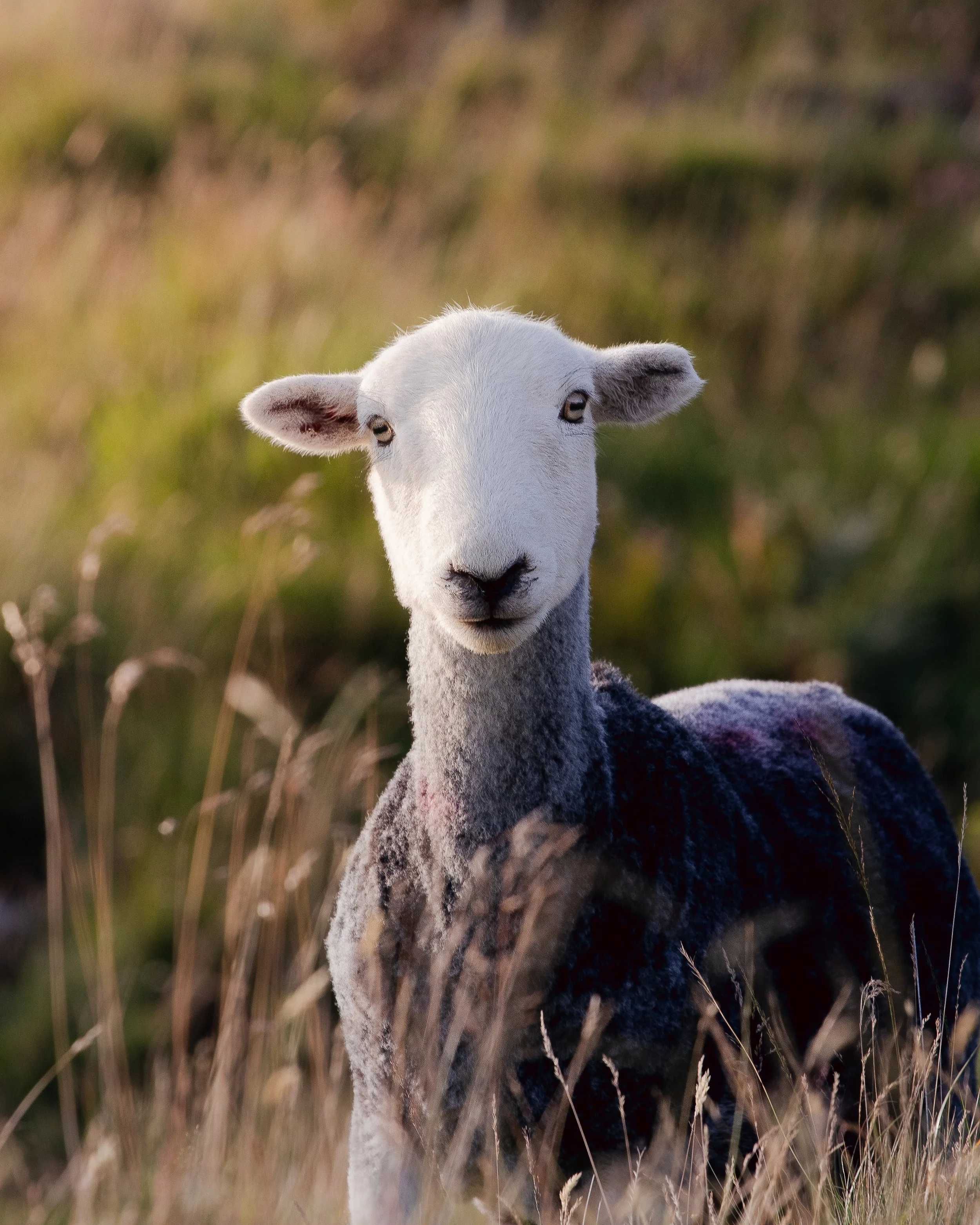
There are hundreds of animals in the Lake District (who doesn’t love a shot of a Herdy?!) ranging from the stunning wildlife to the livestock roaming the fells and the more domesticated; usually someone else's dog or a cat in a farmyard! All of them should be respected and treated as though they were your own.
Street photographers will talk about ‘bruising’ a scene. That is to say that they have impacted the shot they get through their own actions disturbing what is in front of them, or simply by being noticed. I think that this is a good benchmark to use when it comes to animal encounters in the Lake District.
Most wildlife photographers will take steps to hide themselves, be still and be calm so that they don’t startle the animals they are trying to photograph - you want to photograph the animal ‘doing animal things’, not scare them, spook them or encourage to break their normal patterns of behaviour.
Remember that some of these animals, whilst they look awesome, can be dangerous and will fiercely protect their young. One of the scariest encounters I have had was with a bull on my way down Gummer’s How; they’re pretty grumpy at the best of times but pair that with the calf and its mother stood next to it and the game changes! If you are walking with your dog on a lead and cattle start to chase you, let go of the dog's lead rather than putting yourself in danger.
I’m not here to tell you how to stay safe around animals, I am not qualified to do that, but keep your distance, be respectful… and be kind!
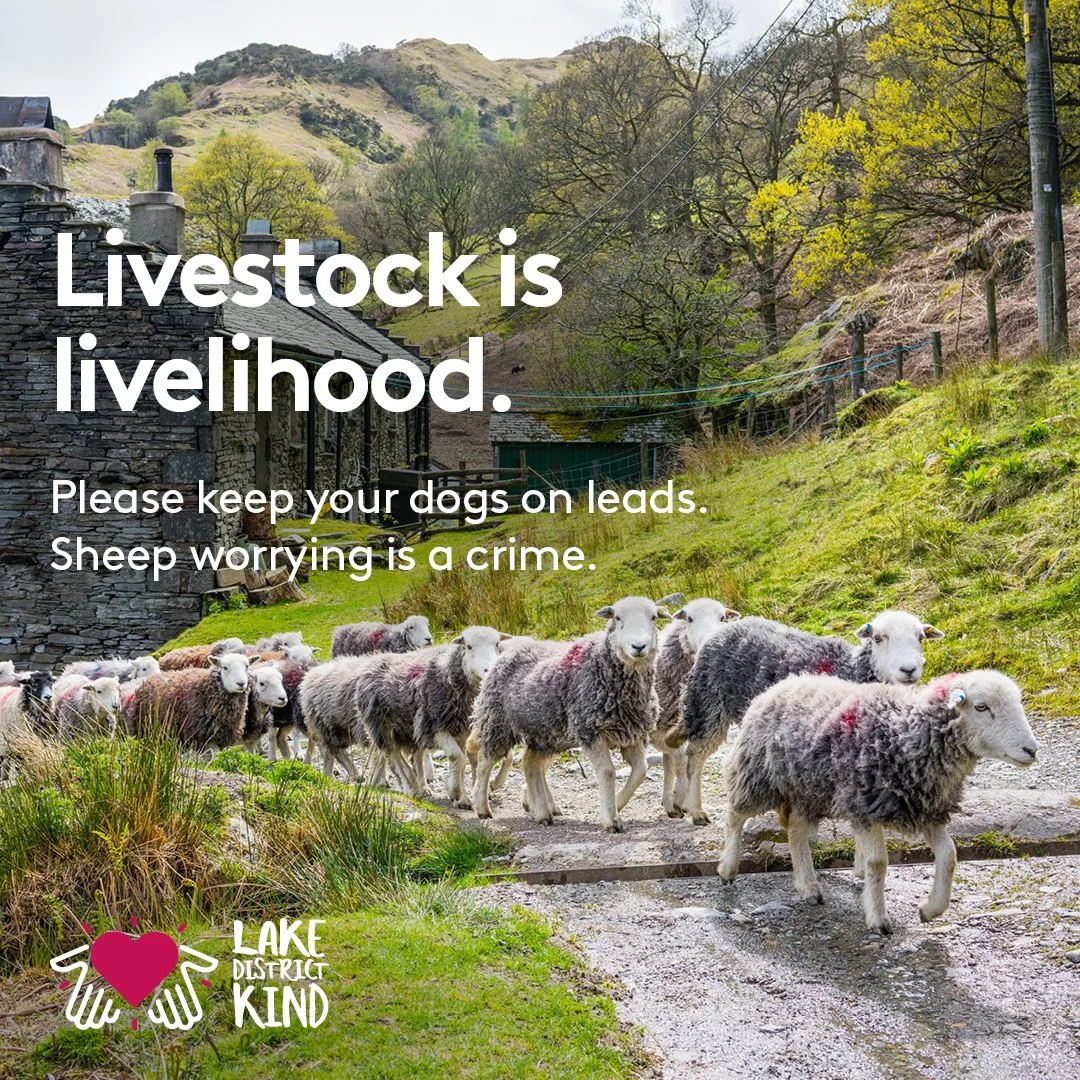
If you’re bringing your dog, keep it on a lead, no matter how good its recall is; there’s a ton of sheep here and sheep worrying is a crime. Oh, and pick up after your dog when it has done its business - no one wants or needs to see that.
If you find that once in a lifetime animal, it’s good practice not to tell and all and sundry on social media where you found it. If it’s rare or unusual, it’s probably protected and the last thing it wants is the world and it’s wife rocking up to take pictures of it - some of the birding groups on Facebook do this really well, and you should do the same.
Hills, Fells and Mountains.
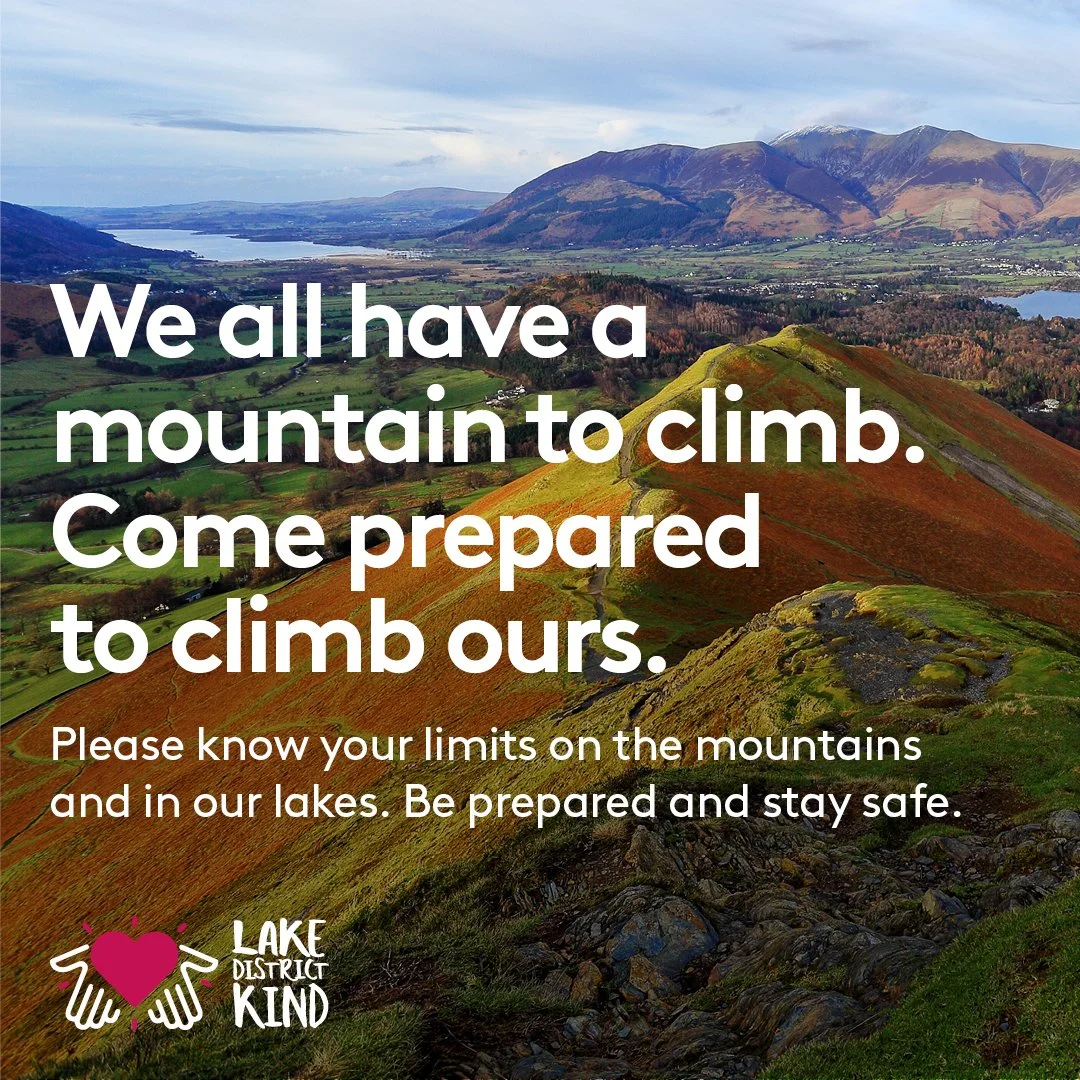
We know that some of the best shots are at the top of fells and mountains - photography is a great way to get some of those 214 fells ticked off. Please, please, please do this safely.
Know your limits, know what you are comfortable doing and know what your absolute ‘nos’ are - don’t go, for example, don’t try and tackle Striding Edge if you can’t deal with heights and you’re not very sure footed.
Take the correct gear - if you use walking poles, take them. If you think it’s going to be icy, make sure you have your ice axe and crampons to hand - if it’s good enough for the fell top assessors, it’s good enough for you. The mountains don’t mess about and neither should you.
CHECK THE WEATHER FORECAST!
Just because it’s beautiful in the valley, doesn’t mean that the story is the same 900m up, near the summit of Hellvellyn. That snow that you see atop the fells on a crisp, dry, winters morning looks stunning, but it can be several feet deep and cover up all sorts of hazards. You can check the Met Office mountain forecast for the Lake District by clicking here. You should be checking this before you set off.
If winter conditions are forecast, make sure you have the appropriate winter equipment for the conditions and, just as importantly, the skills to use it. In full winter conditions that may mean an ice axe and crampons, not simply microspikes.
Take a map. Not just the OS app on your phone. Not All Trails. Not Amint Lakes. A proper, foldable OS Map and compass. And most importantly, make sure you know how to use it.
A map doesn’t need a battery or signal and not to put to finer point on it, it could save your life. Digital mapping is useful, but carry a paper map as a backup and have the skills to use a map and compass.
It’s a good idea to limit the photography kit you are taking with you if you are expecting less than perfect weather. Take a tripod that straps to your bag so you have both hands free. If you think you’re going to need a filter, fit it to your lens before you set off so you’re not fiddling with it on the top of a fell - if you drop it, your natural reaction can be to lunge to try and catch it and that could have disastrous consequences.
Don’t set your tripod up in risky places - keep away from the edges of cliffs and the edges of any bodies of water.
What does any of this have to do with being Lake District Kind?
Aside from the fact that you should be looking after yourself and the other members of your party, you need to be kind to the volunteers who work for the Mountain Rescue teams in the area that you will be walking. These people pay the ultimate kindness by giving freely of their time to come and rescue you when something has gone terribly wrong. So many of the callouts they get could be avoided by better preparedness, planning, knowledge and respect for the environment. We all know that accidents happen, but don’t get yourself involved in an accident that could have been prevented.
Parking
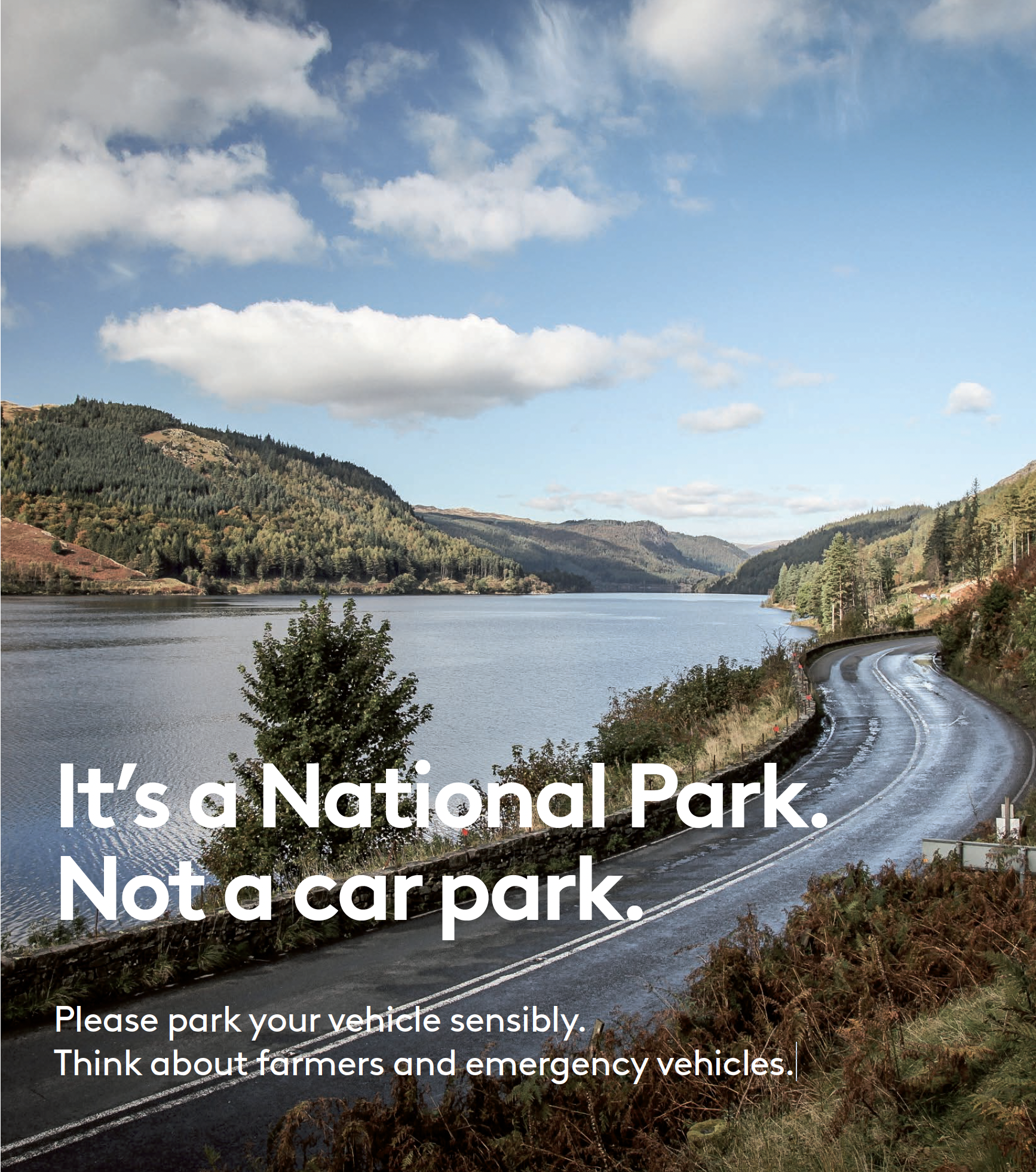
Don’t park like a muppet. There really is no excuse for it.
There are some great spots that you can drive up to and shoot, some have as little as a 30 second walk from the car to the location - Surprise View is a great example of this. Blea Tarn is another great spot if you want to shoot near the car, and less than 5 minutes from the car park, you’ll get to some of the best spots to shoot. If the car park is full then either wait, or come back another day.
Many of the car parks do not permit overnight parking and you should park in a designated camp site, not at the side of the road or in a car park. You can find information about designated campervan and motorhome sites here.
Many of our roads are narrow, single track roads and I have no doubt that at some point, you will find your reversing back down the road to the nearest passing place, so that both parties can continue their journey.
That is of course, unless someone has parked in it. Not only is this annoying, it’s really inconsiderate. These single track roads often run near to farms, and tractors (and farm machinery in general) are not small - you’re not getting past them, you need the passing place.
On the subject of farms, don’t block the gates to fields or clog up farmyards (you will find yourself driving or walking through one at some point). No matter how convenient it is, or if you think you are only going to be five minutes - we’re photographers, nothing takes just five minutes. If the farmer needs to get into the field to attend to their livestock, the time they spend trying to get through the blocked gate could be the difference between livestock and dead-stock - don’t be that person.
Park in designated car parks and parking areas. Stay out of the passing places, unless you are passing, and don’t just abandon your car by the side of the road - you’re not doing anyone any favours and we don’t want the photography community to get a name for being a profession or pastime for people that do that.
Oh and be careful driving through Ambleside - there’s a one way system in operation - this isn’t the kind of feature you want on Facebook!
Respecting Other Photographers and Visitors
Think about how annoyed you would be if you were composing your shot and then someone went and set up in your composition. Don’t be that person.
When you’re setting up your shot, don’t block paths - that’s just going to upset people who are trying to enjoy a hike. And if you’re walking through long grass, or anything that could conceal ground-nesting birds during nesting season, take care with your foot placement and be aware of your surroundings.
The view doesn’t belong to anyone, no one has a right to it. Just because you’re carrying £5,000 worth of equipment, doesn’t mean you have any more right to be there than the next person.
Being Lake District Kind isn't only about protecting the landscape; it's about how we behave towards the other people enjoying it.
Oh and a note on drones - we love aerial shots, they’re dramatic, they’re fun to take and they show this place off from some of its best angles. Always obey the drone code - you’re often near crowds of people, even out in the middle of nowhere. You may also know that the Lake District is home to the RAF’s LFA17 - Low Flying Area 17. You could be lucky enough to see F35s, Typhoons, A400Ms, Hawks and occasionally the Battle of Britain Memorial Flight; the list goes on.
It goes without saying that if you see or hear a low-flying aircraft that could be affected by your drone, you should reduce height or land and wait until it is safe to continue. Always check the apps (Drone Assist is my preferred one) before you fly to see where the restricted airspaces are, make sure you have the correct Flyer/Operator ID where required and that your drone is labelled correctly. You should have appropriate insurance for your activity, and ensure that you’re not being a nuisance to other people or animals.
The National Park’s drone guidance states that drone operators need permission from the landowner for the land they use to take off and land, and it specifically asks drone users to avoid disturbing wildlife and other visitors. Get the shot when you are able to, have permission to and it is safe to do so. Remember: just because you can fly it, doesn’t mean that you always should.
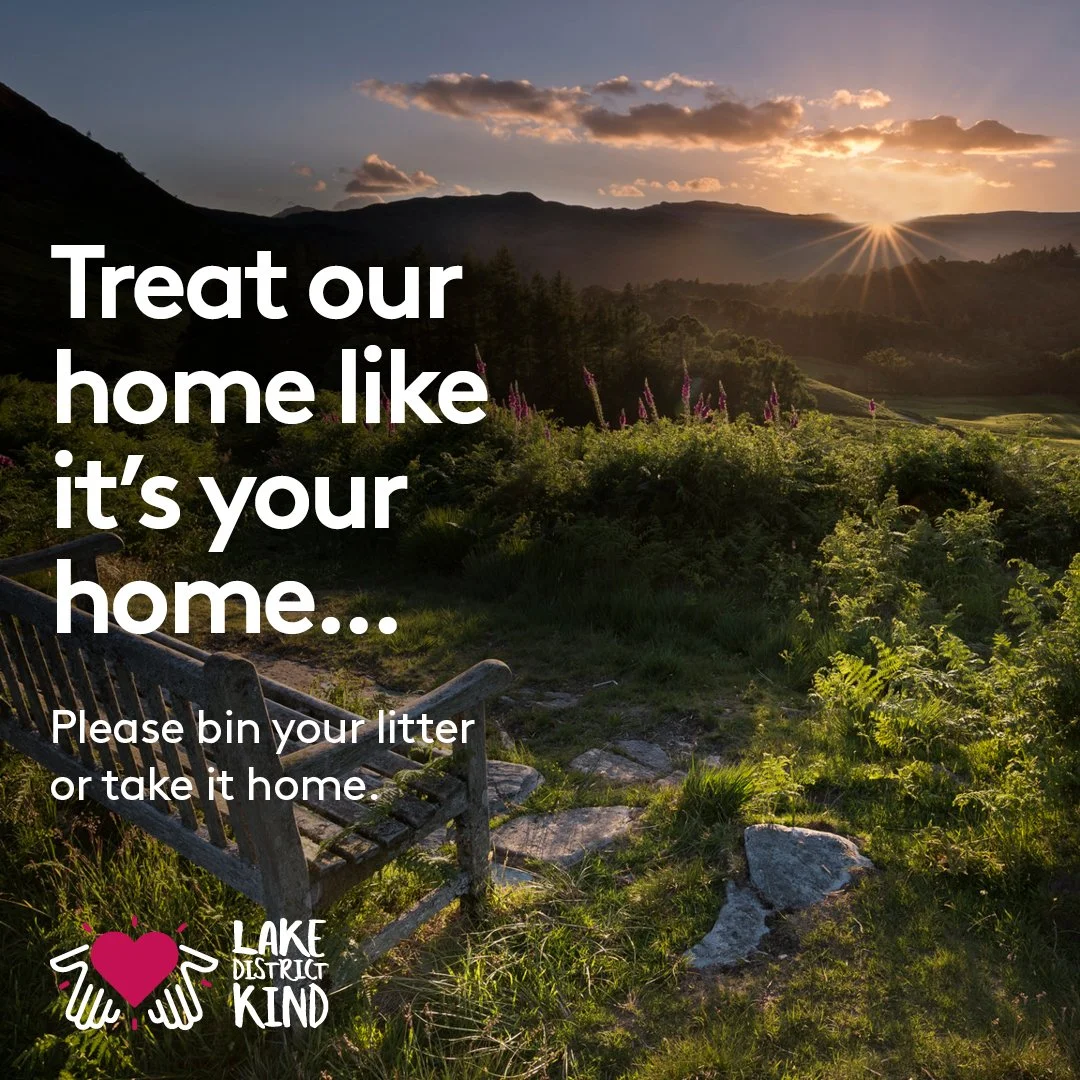
The Lake District is Our Home.
We know that we are incredibly lucky to live and work in such a beautiful part of the world. We love living here and we love to look after it. We love that we’re in a part of the world that other people want to come and enjoy too.
We love people who park considerately. We love people who don’t start fires. We love people who are respectful and who take their litter home. We love people who don’t fly camp and stick to the principles of wild camping. We love people who are considerate of our hardworking farmers, the work they do and their livestock. We love people who leave no trace. We love photographers who want to share their beautiful imagery of the place we call home…
We love people who are Lake District Kind.
Please treat our home like it’s your home.
Thanks for reading, I hope that you enjoyed what I had to say and that you found it useful. Even if you only learn one thing from this, or find out one thing that you can share with another photographer or potential visitor then I have done my job and we can’t wait to see you here.
CHECK OUT SOME OF MY OTHER BLOG POSTS BY CLICKING THE LINKS BELOW.